Newport Beach flood damage restoration — saltwater cleanup, dry-out, and rebuild.
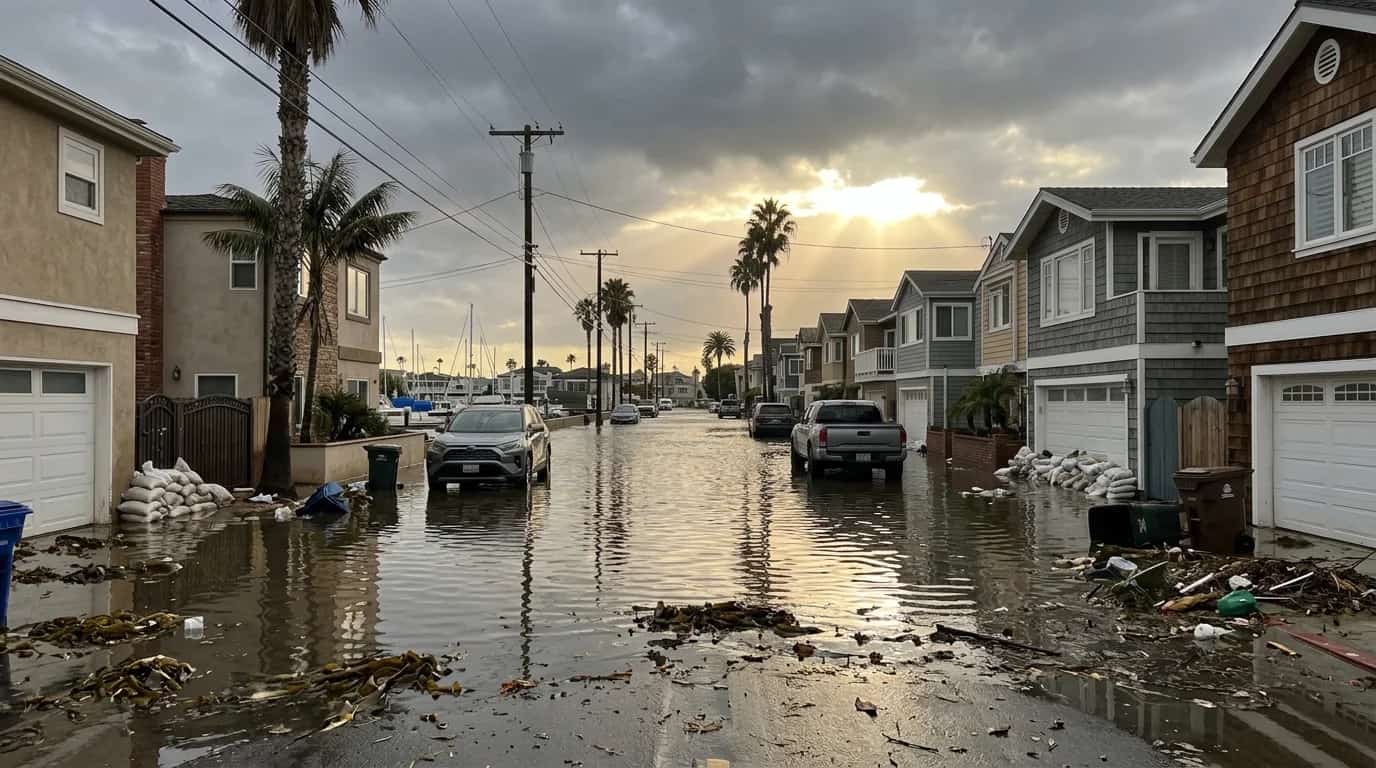
High surf and tidal overflow from Tropical Storm Rachel pushed seawater over the sand berms and into the Balboa Peninsula on Friday, October 9 — flooding streets, garages, and homes several blocks in from the sand. The City of Newport Beach declared a local emergency the next day. Gallagher Restoration Co. runs saltwater flood work out of our Orange County office in Huntington Beach: IICRC-trained crews, a drying protocol built for seawater rather than for a broken pipe, and written documentation for your claim starting the first hour we are on site.
Answered 24/7 by a person
Tropical Storm Rachel surf and high tide overtopped the sand berms
Peninsula streets roughly between 6th and 21st — 15 to 20 blocks flooded
Local emergency declared Saturday, October 10
Orange County office in Huntington Beach, answered by a person
Ocean flooding is not a broken pipe.
A pipe burst is clean water on a clock. Seawater is a contaminated loss with a chemistry problem attached, and the two get handled differently from the first hour. If a crew quotes you a dry-out without mentioning salt, that is the conversation to have before anyone plugs in a fan.
Seawater is Category 3 water
Under the IICRC S500 standard, seawater and rising surface water sit in the same tier as sewage: grossly contaminated. Storm flooding carries sand, marine bacteria, street and fuel runoff, and whatever the overwhelmed storm drains pushed back up. Porous materials that took it on — drywall, insulation, carpet pad, particleboard cabinet boxes — come out rather than getting dried in place.
The water leaves. The salt stays.
This is the part that gets skipped. Chloride left behind in drywall, framing, and slab is hygroscopic — it pulls moisture back out of the air. A wall can hit dry standard on Tuesday and read wet again on Friday with no new water anywhere. Salt has to be flushed with clean water first, then dried, then verified.
Chloride keeps corroding for years
Residual salt quietly attacks fasteners, metal studs, joist hangers, outlet boxes, HVAC coils, and slab rebar long after the floor looks fine again. A fast cosmetic dry-out buys a few months and hands you a structural problem later. Where salt contamination is confirmed, the affected metal and hardware get addressed, not painted over.
Anything that went under gets evaluated
Outlets, subpanels, furnaces, water heaters, and ductwork below the waterline need evaluation before they are energized or run again. Saltwater-exposed electrical components are generally replaced rather than dried — the corrosion has already started inside the housing where you cannot see it.
Six things to do in the next few hours.
Treat standing water as live
Do not wade into a flooded room if any circuit serving it may still be energized. Kill the breaker from a dry location, or leave it alone and tell us when we arrive.
Photograph before you move anything
Wide shots of every affected room, then close-ups of damaged contents. Get the waterline on a wall in at least one frame. Do this before anything goes out to the curb.
Leave the HVAC off
Running the system pulls humid, contaminated air through the whole duct network and spreads the problem into rooms the water never reached.
Skip the household wet-vac
Shop vacuums are not rated for Category 3 water. They aerosolize it and put the contamination into the air you are breathing while you work.
Mark the waterline and the time
A strip of painter's tape at the high-water mark, plus the date and time it peaked, is one of the more useful things you can hand an adjuster or an assistance program.
Call before you gut
Once the drywall is in a dumpster, the evidence your claim rests on went with it. A free assessment and a written scope take a couple of hours and cost nothing.
Assessment to final paint, one crew.
Assessment, moisture mapping, written scope
A crew rolls from the Huntington Beach office and documents what actually happened: waterline height, moisture readings through walls and subfloor, thermal imaging for water tracked inside cavities, affected contents, and a line-item written scope. Free, no obligation, and it is the document everything downstream depends on.
Extraction and controlled Category 3 removal
Standing water out with truck-mount extraction, then controlled removal of the porous materials that took on seawater. Cut lines go above the measured moisture line rather than at an arbitrary height, and every removal is photographed and logged before it leaves the property.
Salt flush, structural drying, daily verification
Salt-contaminated surfaces are rinsed with clean water before drying begins — otherwise the chloride stays behind and keeps pulling moisture back in. Then air movers and LGR dehumidifiers, with moisture readings logged every day until materials reach dry standard and hold it.
Antimicrobial, clearance, and rebuild
Antimicrobial application, clearance verification, then the rebuild — drywall, insulation, paint, flooring, baseboard, cabinetry — handled by the same crew that did the mitigation. No handoff to a second contractor, no gap where the job sits open.
What flood coverage actually does and does not do.
Direct billing where coverage applies
Here is the straight version. A standard California homeowners policy generally excludes flood, and that exclusion typically covers storm surge and tidal overflow — which is what came over the berms on October 9. If you carry a separate NFIP or private flood policy, this event is what it exists for. If you do not, there may still be paths worth looking at: wind-driven rain, a sewer or drain backup if you carry that endorsement, and the assistance channels a declared local emergency can open. We are not your adjuster and we will not tell you what your policy covers — read it, or have your agent walk you through it. What we will do is document the loss to the standard a carrier or an assistance program actually requires: dated photos, moisture maps, a line-item written scope, and daily drying logs. That file is worth having whether or not a check is coming, and it has to be built before the demolition, not reconstructed after it. Where coverage does apply, we bill the carrier direct.
Local before the storm, here after it.
Gallagher Restoration Co. is family-owned and has worked water, fire, mold, and storm losses across Southern California for more than 15 years. An event this size pulls in storm chasers — out-of-state crews who show up for a month, collect on the easy jobs, and are unreachable when a wall reads wet again in January. We are not going anywhere. Our Orange County office is in Huntington Beach, ten minutes up the coast, and headquarters is in Canyon Lake. CSLB licensed #1061640, insured, IICRC-trained technicians, and one crew from extraction through final paint. The phone is answered by a person at any hour.
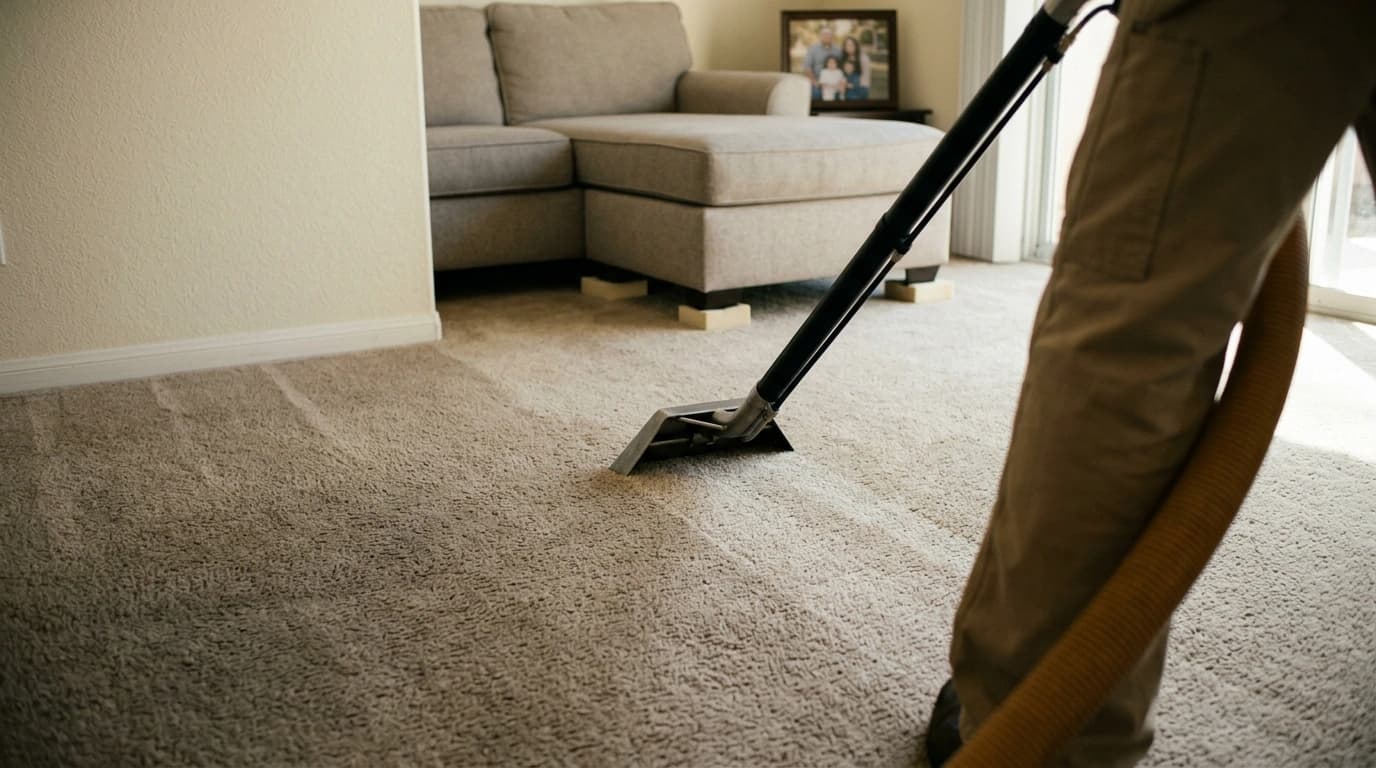
Truck-mount extraction, LGR dehumidifiers, thermal imaging, and daily moisture logs.
Newport Beach flood damage — what people are asking this week.
Does homeowners insurance cover the Newport Beach flooding from Tropical Storm Rachel?
Usually not on its own. Standard California homeowners policies generally exclude flood, and that exclusion normally extends to storm surge and tidal overflow, which is what caused the October 9 flooding on the Balboa Peninsula. A separate NFIP or private flood policy is what typically responds to this kind of loss. Other parts of your coverage may still apply depending on how water entered — wind-driven rain, and sewer or drain backup if you carry that endorsement, are both worth checking. Read your policy or ask your agent directly. Either way, document the loss now: Gallagher Restoration provides dated photos, moisture maps, a written line-item scope, and daily drying logs, and the on-site assessment is free.
Why does saltwater flooding need different treatment than a burst pipe?
Two reasons. First, seawater is Category 3 water under the IICRC S500 standard — grossly contaminated, the same tier as sewage — so porous materials that absorbed it are removed rather than dried in place. Second, the water evaporates but the salt does not. Chloride left in drywall, framing, and concrete is hygroscopic: it pulls moisture back out of the air, so a wall can test dry and then read wet again days later, and the same salt corrodes fasteners, metal studs, outlet boxes, and rebar for years. Salt-contaminated surfaces have to be flushed with clean water before drying, which a standard pipe-burst dry-out does not do.
My house flooded a few days ago and seems dry. Do I still need an inspection?
Yes. Surfaces dry long before the material behind them does, and wall cavities, subfloor, and insulation hold water you cannot see or smell yet. Mold can begin establishing within 24 to 48 hours in coastal humidity, and residual salt keeps re-wetting materials after the visible water is gone. A moisture inspection with meters and thermal imaging takes under an hour and tells you definitively whether there is still water in the structure.
How fast can you get to Newport Beach or the Balboa Peninsula?
We dispatch to Newport Beach from our Orange County office in Huntington Beach, roughly ten minutes up the coast, and typical arrival is within 60 minutes of the call. During a multi-day storm response we are running several jobs at once, so call as early as you can — we will tell you honestly where you fall in the queue rather than promise a window we cannot hold.
Should I start tearing out wet drywall myself?
Not before the loss is documented. Once materials are gone, so is the proof of how far the water went and what it reached, and that documentation is the foundation of any claim or assistance application. There is also a safety issue: Category 3 water means respiratory and contact exposure, and tearing into a wet wall without containment spreads it through the house. Call for the free assessment first, then removal happens as a documented step rather than as cleanup you cannot prove.
What does Newport Beach flood restoration cost?
It depends on how far the water traveled and how much porous material it reached. A flooded garage, or a single ground-floor room with limited drywall removal, typically runs in the low thousands. A ground floor taken several rooms deep — drywall and insulation out to the measured moisture line, cabinetry affected, structural drying over several days — commonly runs $8,000 to $25,000 or more, and that is before reconstruction. The on-site assessment and written scope cost nothing, and the scope is a real number you can take to an adjuster or compare against another bid. Get that in hand before you sign any restoration contract.
Trusted Across Southern California
“I can’t say enough good things about Gallagher Restoration. I am extremely happy and satisfied with the work and effort from their entire team. From day one, everyone was professional, helpful, and knowledgeable. Anytime I had questions, they either had the answers right away or took the initiative to find them and point me in the right direction. Their communication was consistent and timely—even after 12 months into this process, they continued to respond quickly and support me when I needed…”
 Saul Huerta
“I came home to leak from the upstairs bathroom. Called Gallagher Restoration after hours. Nick was so nice and confirmed they would be out early the next morning. Nick and Daniel were respectful of our home, made sure to protect everything. The communication was outstanding throughout the entire process. I would highly recommend Gallagher Restoration Jennifer, Nick, and Daniel.”
 DeAnn Smith
“I really appreciate the work done by David Schumm of Gallagher Restoration during a recent AC condensation leak in my attic. David was incredibly professional, communicative, and easy to work with through the whole process. He made a stressful situation so much easier to manage, taking the time to explain everything clearly and ensuring our home was taken care of properly. I highly recommend David and the team at Gallagher Restoration if you ever need reliable, honest service. Thank you.”
 AE Galvan
“I have really bad water damage to my flooring in my bathroom. Gallagher Restoration was recommended by my property management company and I would also recommend Gallagher Restoration as well because they truly delivered. The first person on the team that came out to my home for water damage to my flooring in my bathroom was Nick, Nick was friendly and very polite. The day that Nick showed up to my house he was on time like he said he would be and very respectful. Nick communicated with me…”
 Lateraa Frierson
“Super friendly and professional service. We had nick, Frankie and David out. They were fast , professional, thorough and friendly. 10 out of 10 definitely recommend”
 Margaret Cruz
Flooded on the Peninsula? Let us document it before anything gets torn out.
The on-site assessment, moisture mapping, and written scope cost nothing. You end up with a real file for your claim and a straight answer about what the work involves — whether you hire us or not.