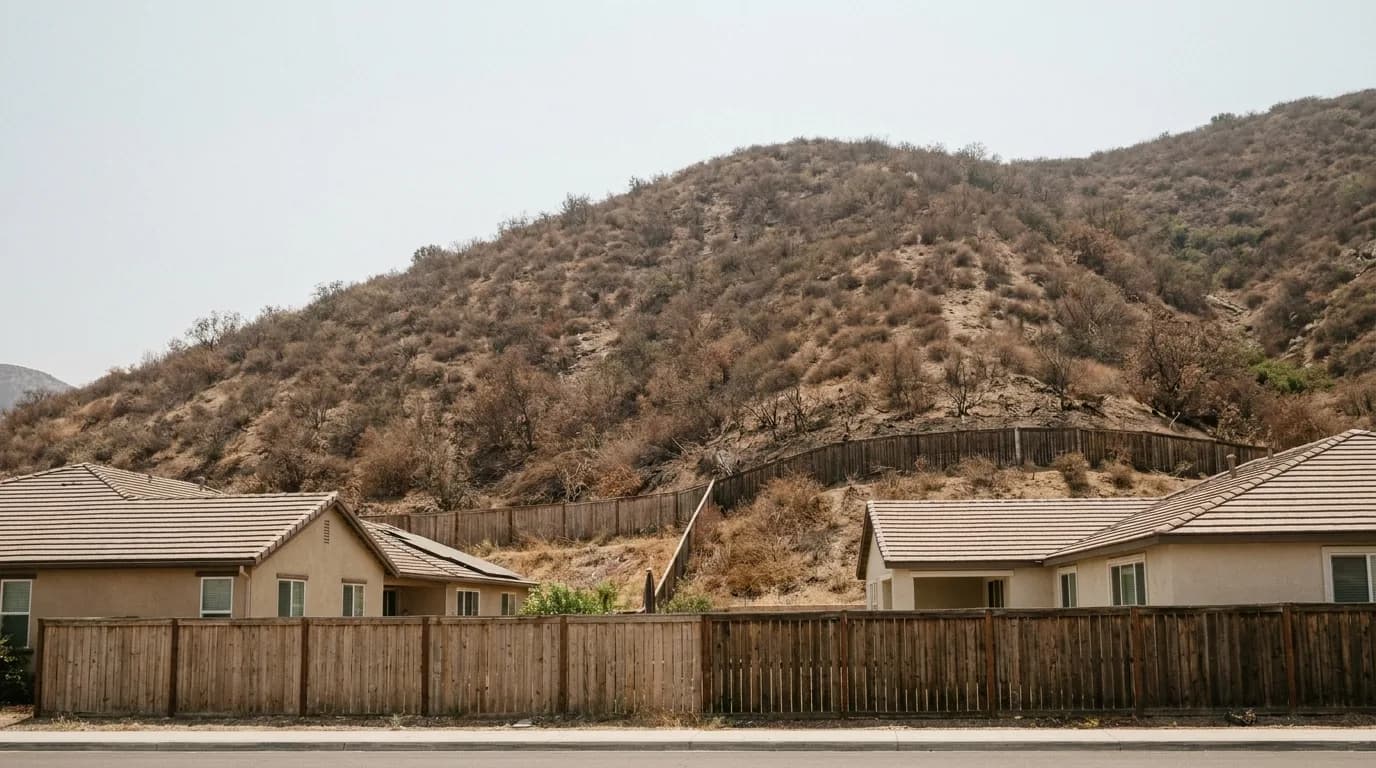
The winds arrive before the fires do, and the gap between them is the only preparation window you get. What actually protects a house — and what restoration crews find in the homes that didn't burn.
Santa Ana winds are not a storm. They are a pressure pattern — high pressure over the Great Basin pushing air down and out through the passes and canyons toward the coast. Air warms and dries as it descends, which is why a Santa Ana day in Temecula or Corona can arrive hot, cloudless, and at single-digit humidity while the calendar still says September.
That combination is what makes the season dangerous. The vegetation has had no meaningful rain since spring, the humidity drops low enough to pull moisture out of what little is left, and then the wind supplies the one thing a fire needs to move: speed. The winds typically run from September through December and peak in October and November.
The useful thing about that schedule is that it is a schedule. Unlike a pipe failure, this is a hazard with a season, and the preparation window is the stretch of ordinary weather you are in right now.
Most homes are lost to embers, not to a wall of flame
This is the single most counterintuitive fact about wildland-urban interface fires, and it changes what preparation is worth doing. Wind-driven embers travel well ahead of a fire front — often more than a mile — and land by the thousands on and around structures. A house that is never touched by the fire itself can ignite hours later from an ember that found somewhere to smolder.
Embers do not need much. They need a gutter full of dry leaves, a vent screen coarse enough to let them through, a doormat, a stack of firewood against the siding, a patio cushion, or a gap under a wood gate. Hardening a house against wildfire is mostly a matter of removing those small opportunities, one at a time.
The five feet closest to the house matter most
California's defensible space requirements extend 100 feet from the structure, but the zone that gets the least attention is the one that does the most work: the first five feet. State law established this ember-resistant zone precisely because it is where a landed ember turns into a house fire.
- Zone 0, zero to five feet — the ember-resistant zone. Nothing combustible against the structure: no bark mulch, no firewood, no stored plastics, no dry plants under windows, nothing stacked against the siding. Gravel, concrete, pavers, or bare soil instead.
- Zone 1, five to thirty feet — the lean, clean, and green zone. Remove dead plants and leaf litter, keep tree limbs clear of other trees and of the chimney, and keep anything that burns away from decks and fences.
- Zone 2, thirty to one hundred feet — reduce fuel. Mow annual grasses down, create vertical and horizontal spacing between shrubs and trees, and remove accumulated dead material.
On a typical tract lot in Menifee, Murrieta, or Lake Elsinore, Zone 2 often falls partly on a neighbor's property or on open space, which is exactly why Zone 0 deserves your attention — it is entirely within your control, and it is where the decisive ignition usually happens.
A short list that is worth one afternoon
- Clear roof valleys and gutters completely. Dry debris in a gutter is a line of kindling attached to the roofline.
- Check every vent — attic, crawlspace, dryer, soffit, gable. Ember-resistant vents or 1/8-inch metal mesh screening. No plastic.
- Move firewood, propane tanks, and stored lumber well away from the house, not just to the side yard.
- Clear the area under decks and stairs, and screen the openings. Under-deck accumulation is a classic ember trap.
- Trim branches back from the roof and away from the chimney.
- Replace or remove combustible mats, cushions, and furniture within five feet of the structure before a wind event, not during one.
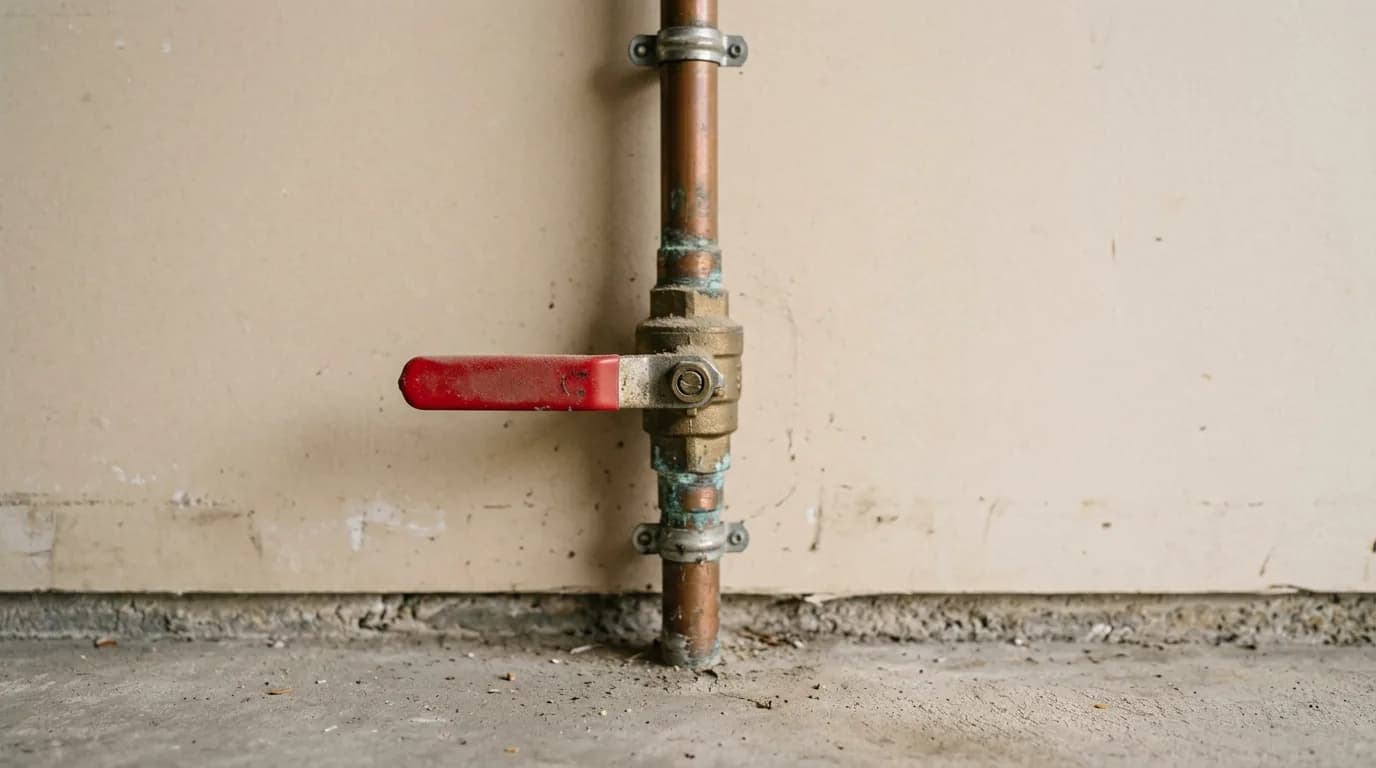
- Know where your gas and water shutoffs are, and confirm the valves actually turn.
What happens to the houses that don't burn
Every wildfire produces a small number of destroyed homes and a very large number of contaminated ones. The second group is the one that gets handled badly, because the damage is real but invisible from the curb.
Wildfire smoke is not the same as a kitchen fire. The fuel load includes vegetation plus whatever structures burned — siding, insulation, wiring, vehicles, household chemicals — so the residue is chemically mixed, often alkaline and corrosive rather than simply greasy. It enters through the same openings embers do, settles into attic insulation, loads the HVAC system, and sits in soft contents. Ash tracked indoors on shoes and pets keeps redistributing it for weeks.
Homeowners usually try to clean it themselves first, and the two most common instincts both make it worse: dry sweeping, which aerosolizes fine particulate and spreads it, and running the HVAC system to air the place out, which pulls residue through the ductwork and deposits it in every room. The correct sequence is laid out in our guide to wildfire ash cleanup inside your home, and the heavier cases are what smoke clean-up is for.
Before the wind event, take ten minutes of photos
Walk the house with your phone and record every room, the roofline, the yard, the garage, and the contents of closets and cabinets. Store it somewhere that is not in the house. This takes very little time, and it is the difference between describing what you owned and showing it — which is the substance of property damage management on any claim that becomes contested.
Frequently asked questions
- When is Santa Ana wind season in Southern California?
- Roughly September through December, peaking in October and November, though events can occur outside that window. The pattern needs high pressure inland and lower pressure at the coast, which is most common in fall and early winter.
- Does homeowners insurance cover smoke damage if my house didn't burn?
- Standard homeowners policies generally cover smoke as a peril, including smoke from a fire that never reached your property. The dispute is usually not whether it is covered but how much cleaning the loss actually requires — which is why documentation of the residue found, including inside the HVAC system, matters more than an adjuster's first walkthrough.
- Can I just replace my air filter after a wildfire?
- A filter change is a reasonable first step and it is rarely sufficient on its own. Residue settles inside the ductwork, on the evaporator coil, and in the blower housing, where a filter cannot reach it. If the system ran during or after the event, it needs to be inspected rather than assumed clean.
- Is wildfire ash dangerous to handle?
- Treat it as hazardous. Wildfire ash can contain combustion byproducts from burned structures and vehicles, not just vegetation. Use an N95 or better, gloves, and long sleeves, keep the ash damp rather than dry while removing it, and keep children and pets out of the area until it is gone.
If the winds turn into a fire near you
Gallagher Restoration Co. is family-owned, IICRC-trained, and licensed under CSLB #1061640, dispatching from Canyon Lake with satellite offices in Huntington Beach and Carlsbad across Riverside, San Bernardino, Orange, and San Diego counties. We handle wildfire damage from the first ash assessment through reconstruction, and we target 60 minutes on-site. Call (951) 541-0034 any hour, or request an assessment.