Washing machines, dishwashers, and refrigerator ice lines cause two kinds of loss — the sudden one and the quiet one. The quiet one is usually more expensive, and it is almost always preventable.
Three appliances in a typical home are connected directly to pressurized water and left unattended for years: the washing machine, the dishwasher, and the refrigerator with an ice maker. Each one fails in two distinct ways, and homeowners are only prepared for one of them.
The sudden failure is dramatic and obvious — a supply hose bursts, and in an hour there is water across the floor. It is also, on average, the cheaper of the two. The slow failure leaks a cup a day behind a cabinet or under a pan, goes unnoticed for months, and is found when someone smells something or the flooring starts to lift. By then the question is not drying. It is what has to be removed.
The washing machine: hoses and the five-minute fix
Washer supply hoses are the most reliably preventable water loss in residential property. Standard rubber hoses sit under full line pressure continuously, degrade from the inside, and typically carry a manufacturer service life of around five years. A great many of them are fifteen years old.
When one lets go, it does not trickle. It discharges at supply pressure until someone closes the valve, which in a second-floor laundry closet means water going through the floor into the ceiling below before anyone is home.
- Replace rubber hoses with braided stainless steel. This is a twenty-dollar part and a ten-minute job, and it is the highest-return water-damage prevention available to a homeowner.
- Write the date on the hose with a marker when you install it, and replace on a schedule rather than on failure.
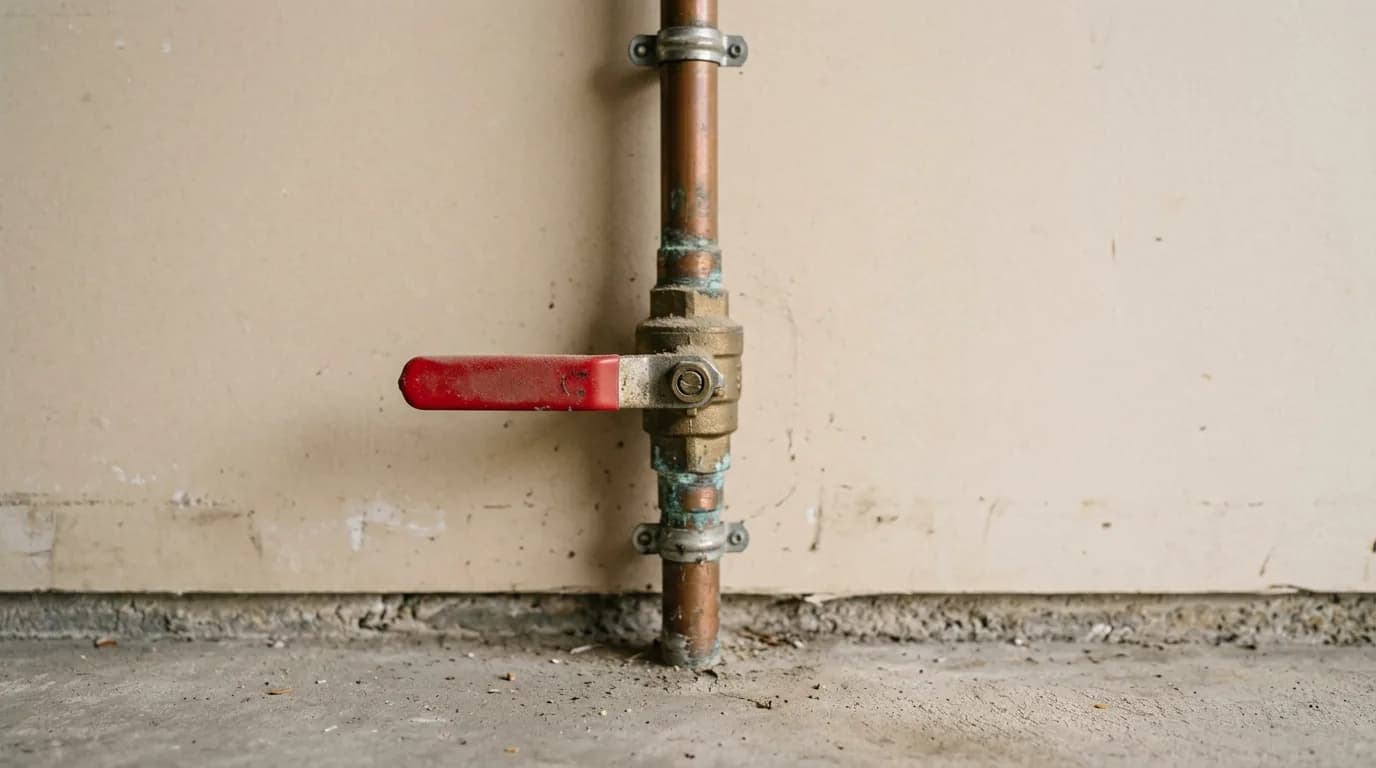
- Close the supply valves if you will be away for more than a few days — or install a single-lever laundry shutoff so it takes one motion.
- Check behind the machine twice a year. Look for rust staining, stiffness, bulging near the fittings, and dampness at the valve body.
- Make sure the drain hose is secured in the standpipe. A hose that works itself loose during a spin cycle discharges the full drain volume onto the floor.
The dishwasher: the leak you cannot see
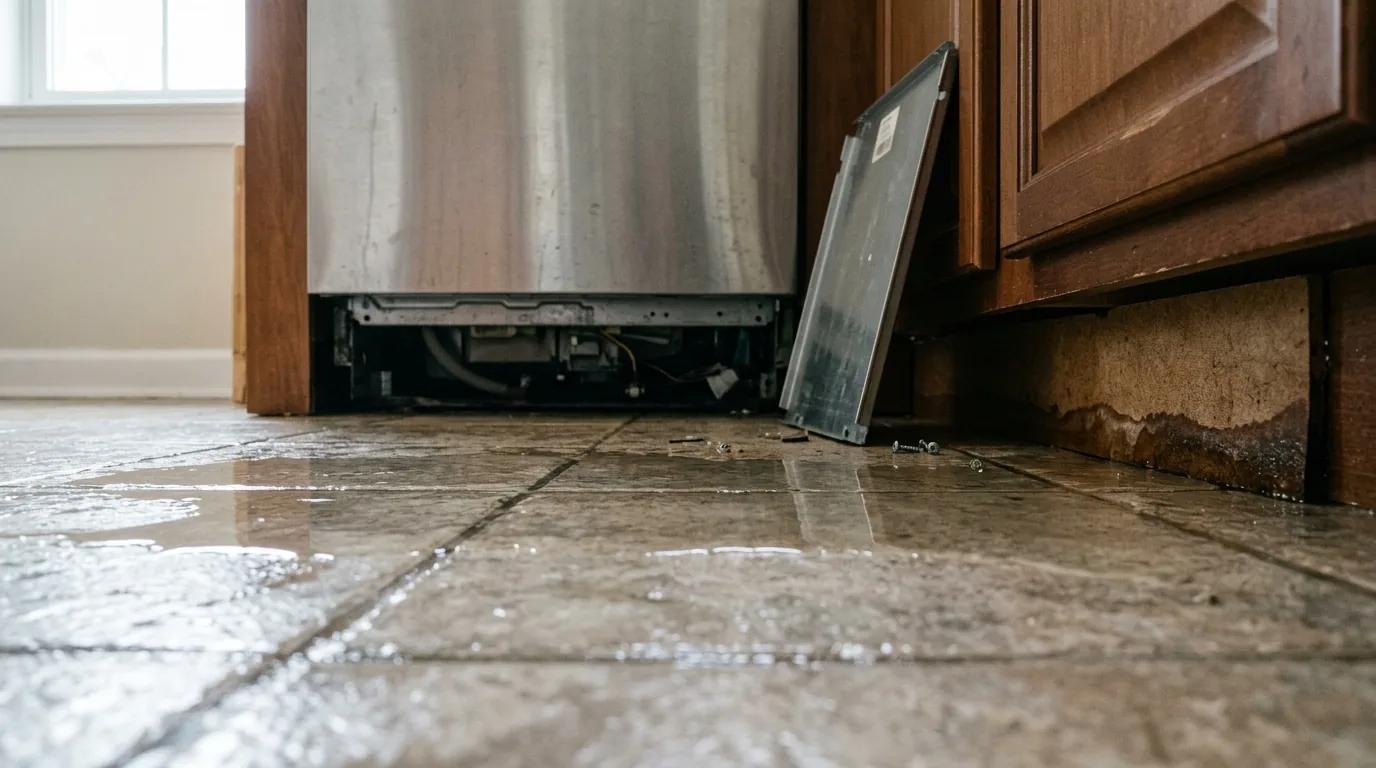
A dishwasher sits recessed under the counter with cabinets on both sides, which means a leak at the door gasket, the supply fitting, the drain connection, or the pump seal runs under the cabinet base and out across the subfloor rather than into the room where you would see it.
The symptoms show up well away from the appliance: a toe-kick that has darkened or swollen, cabinet floor that is soft, a laminate or engineered plank seam that has lifted several feet away, or a musty smell in the kitchen that nobody can source. On a slab home the water tracks along the slab and surfaces at the nearest seam. On a raised foundation it goes into the crawlspace, where nothing surfaces at all.
Checking is straightforward: pull the lower access panel and look and feel with a flashlight during a wash cycle. Pay attention to the area where the supply line meets the valve and to the base of the pump housing. If the cardboard or insulation under there is stained, you have a history even if it is dry today.
The refrigerator: the quarter-inch line nobody thinks about
Ice maker supply lines are the most common slow leak we find in kitchens, and they have a specific and avoidable failure mode. Many were installed as small-diameter plastic tubing, run behind the refrigerator where they are kinked by the appliance being pushed back against the wall, and then tapped into the cold line with a self-piercing saddle valve.
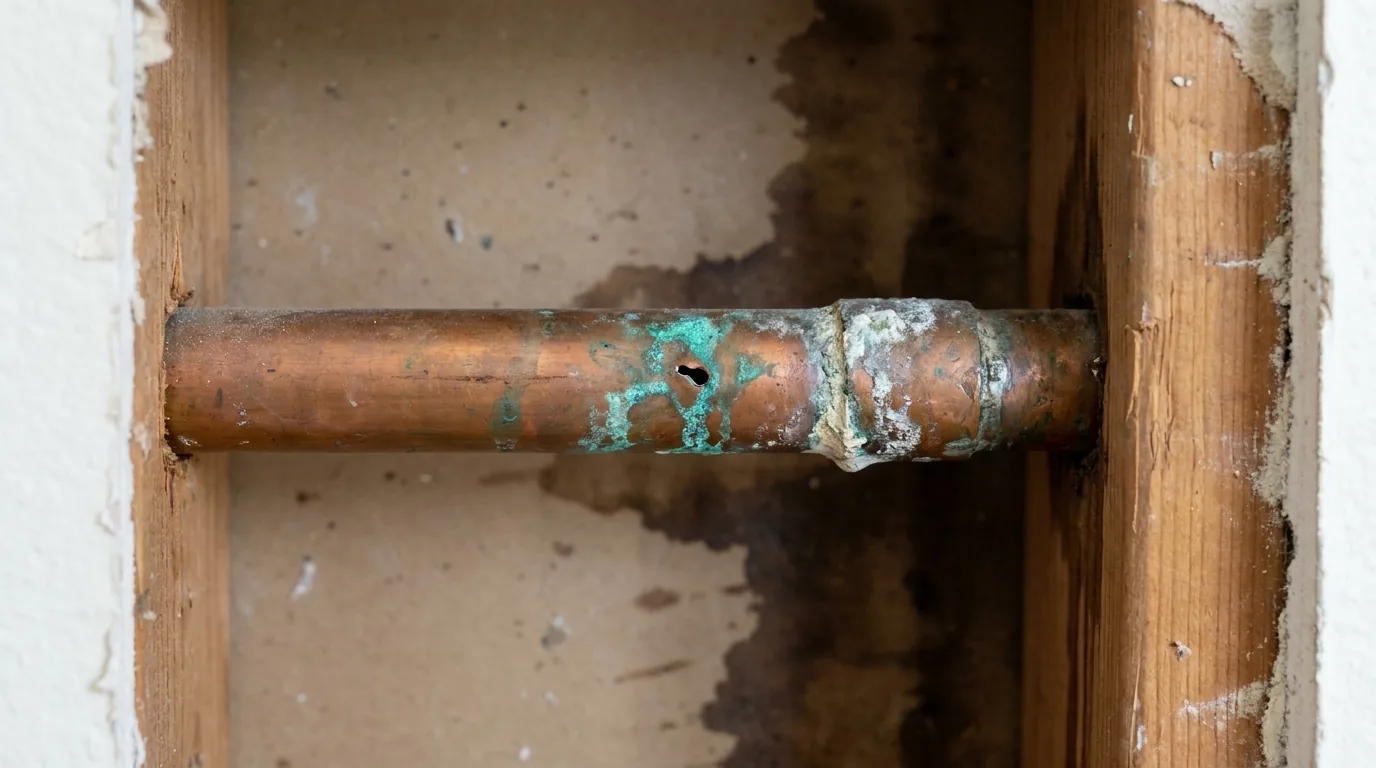
Saddle valves are the real problem. They work for years and then weep at the piercing point. Because the refrigerator is directly in front of the leak, the water goes under the unit and into the flooring and the wall behind it — and nobody pulls out a refrigerator until something is already wrong.
- Replace plastic tubing with braided stainless or copper, and replace saddle valves with a proper quarter-turn stop.
- Leave a service loop so the line is not pinched when the refrigerator is pushed back.
- Pull the refrigerator out once a year. Look at the floor under it and the wall behind it, not just the line.
Why the slow leak is the expensive one
| Factor | Sudden Failure | Slow Leak |
|---|---|---|
| Water category | Usually Category 1 — clean supply water | Often degraded to Category 2 or 3 by dwell time and contact |
| Discovery | Immediate | Weeks to months |
| Mold involvement | Avoidable with fast drying | Likely by the time it is found |
| Typical scope | Extraction and in-place drying | Cabinet and flooring removal, remediation, rebuild |
| Insurance posture | Sudden and accidental — generally covered | Long-term seepage — frequently excluded |
That last row is the one worth reading twice. Most homeowners policies cover sudden and accidental discharge and exclude damage from leaks that occurred gradually over weeks or months. A burst hose is usually a claim. A dishwasher that has been weeping since spring frequently is not — and the repair is larger. Our post on whether homeowners insurance covers water damage in California covers the language carriers use.
What proper repair involves
Cabinetry makes appliance leaks harder than open-floor losses. A cabinet base is typically particleboard, which swells irreversibly and holds moisture against the subfloor. A toe-kick cavity has essentially no airflow. Drying equipment pointed at the room does nothing for the space under the sink base.
Done properly, the work means removing the toe-kick and often the cabinet base, pulling the affected flooring rather than drying over it, drilling or removing the lower wall cavity if water reached it, and placing targeted airflow into the cavities with daily moisture readings against a documented drying goal. Done improperly, the surfaces read dry, the cabinet is put back, and the smell returns in three weeks. The full progression is in our guide to water damage categories, and the remediation side in mold remediation.
Frequently asked questions
- How do I know if there is water under my kitchen cabinets?
- Press the toe-kick and the cabinet floor with your thumb — soft or spongy means saturated. Look for dark staining at the base of the cabinet sides, lifted flooring seams near the appliance, and a musty smell that is stronger with the sink cabinet open. A moisture meter on the cabinet base settles it in seconds; a visual check often will not.
- Are braided stainless steel hoses actually better?
- Yes. The braid is a burst restraint around an inner tube, so the common rubber-hose failure mode — the tube splitting under pressure — is contained rather than catastrophic. They are not permanent and should still be inspected and replaced periodically, but they fail far less often and far less dramatically.
- My dishwasher leaked once and dried up. Do I need to do anything?
- Find out where it went. A one-time overflow onto a tile floor that was wiped up is nothing. The same volume that ran under the cabinet base and into the subfloor is not, and it will not announce itself. If the leak was at the door and stayed in the room, you are fine; if you could not see the source, it is worth a look underneath.
- Will a leak detector help with these?
- Considerably, and this is where they earn their cost. Point sensors under the sink, behind the washer, and under the refrigerator catch the slow leaks that otherwise run for months. Models that also close an automatic shutoff valve additionally handle the sudden failure.
If you have found one
Gallagher Restoration Co. handles water damage clean-up across Riverside, San Bernardino, Orange, and San Diego counties — family-owned, IICRC-trained, CSLB #1061640, with a 60-minute on-site target and direct carrier billing. Call (951) 541-0034 for 24/7 dispatch or request an assessment.