Inland homes get mold from water events. Coastal homes get it from air. The mechanism is condensation, not leakage, and it explains why the inspection finds nothing wrong with the plumbing.
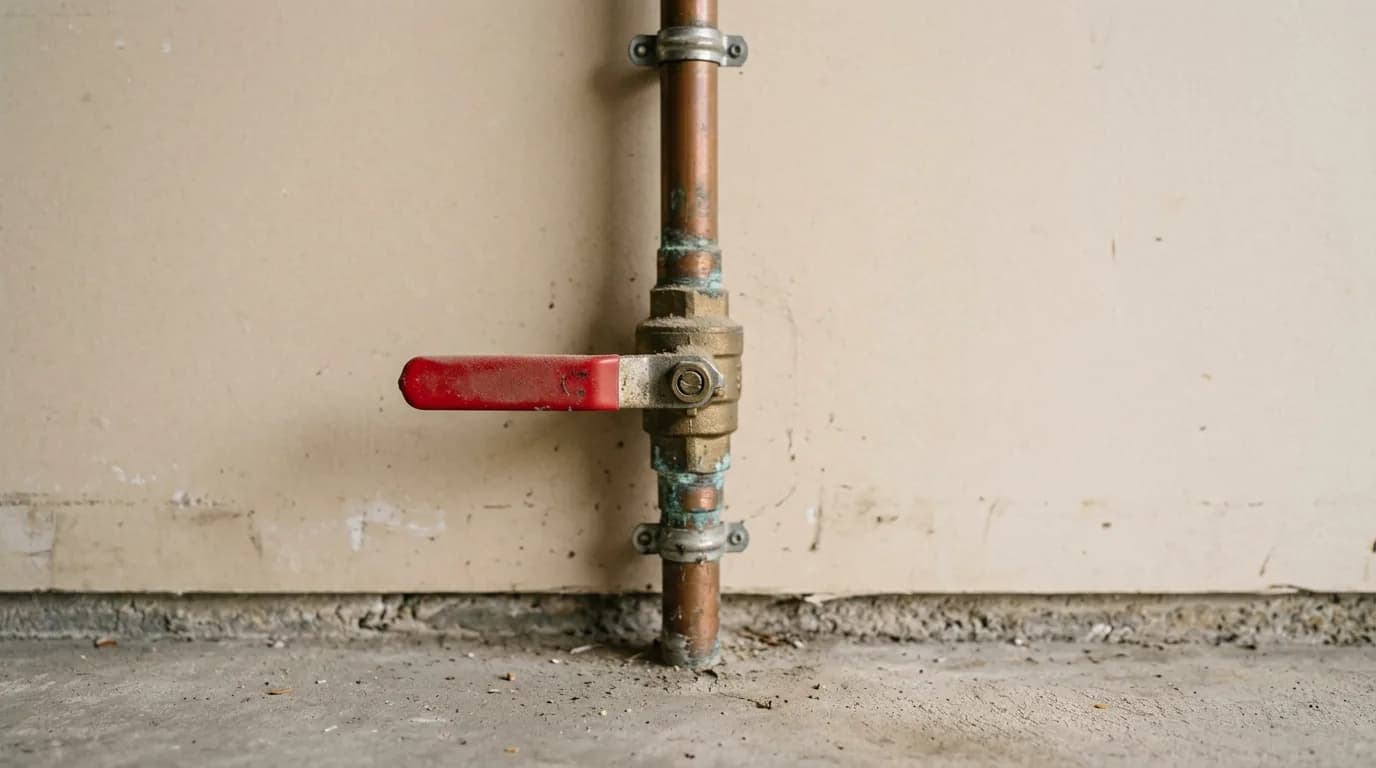
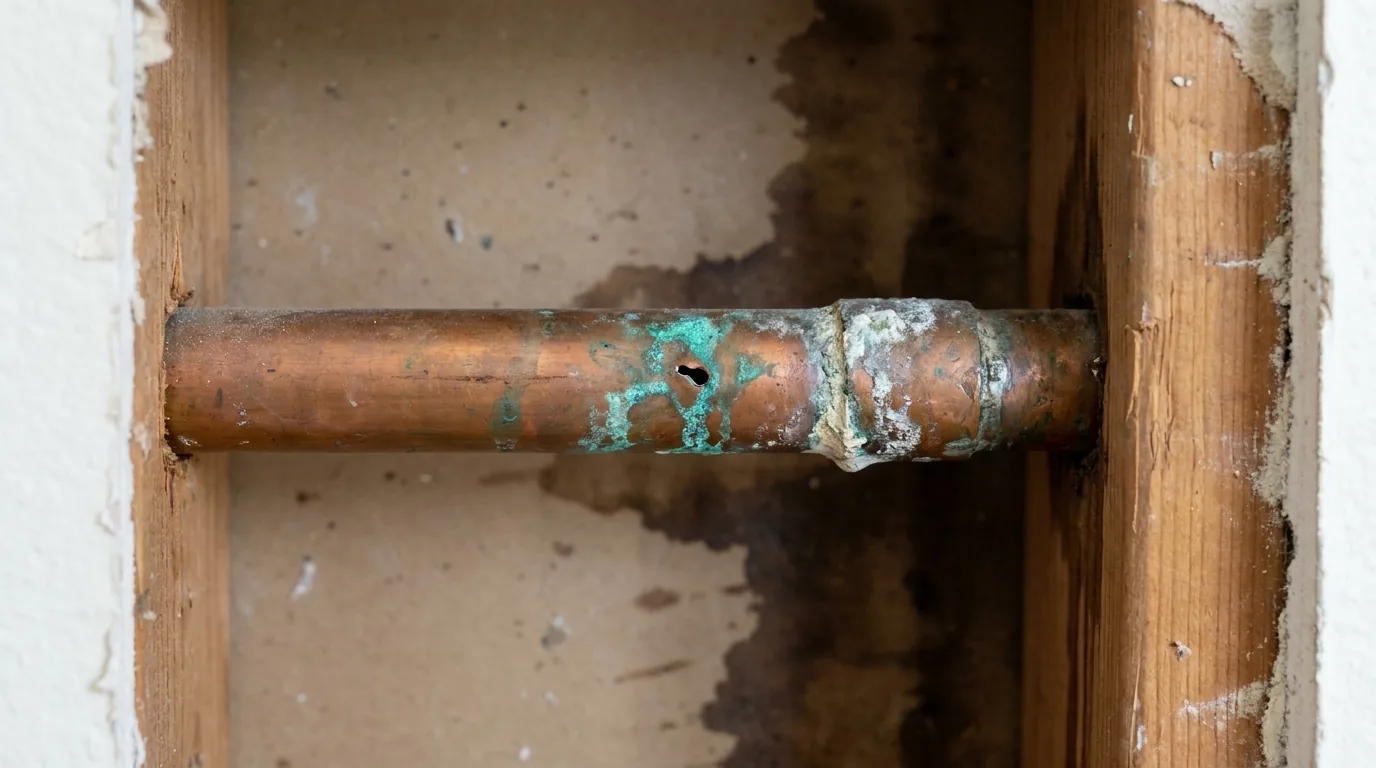
There is a conversation we have repeatedly in Huntington Beach, Carlsbad, Oceanside, and Vista that almost never happens in Hemet or Perris. A homeowner has visible mold, a plumber has found no leak, the roof is sound, and nobody can explain where the water came from.
There was no water event. The water came out of the air.
Mold does not need liquid water, it needs a wet surface
This is the distinction that makes coastal mold make sense. Mold requires moisture, a food source, and time. Ordinary building materials — drywall paper, wood, dust on any surface — supply the food. What people assume supplies the moisture is a leak, but the actual requirement is surface moisture, and air will provide that on its own under the right conditions.
Air holds a certain amount of water vapor depending on its temperature. Cool it, and at some point it can no longer hold what it is carrying, and the excess condenses onto whatever surface cooled it. That is the dew point, and it is the same process that puts water on the outside of a cold glass. In a building it happens on any surface cooler than the air around it: the inside face of an exterior wall, the back of a closet, a window frame, an uninsulated duct, the slab under a rug.
Mold growth generally becomes sustainable when the relative humidity at the surface sits above roughly 60 percent for long enough. Coastal Southern California runs well above that outdoors for much of the year. The marine layer is not just overcast — it is high-humidity air sitting against the house, and every time a window opens it comes inside.
Why coastal homes and inland homes fail differently
| Coastal — Huntington Beach, Carlsbad, Oceanside | Inland — Menifee, Hemet, Murrieta | |
|---|---|---|
| Typical moisture source | Ambient humidity and condensation | Discrete water event — leak, slab leak, supply failure |
| Onset | Gradual, often seasonal and recurring | Sudden, traceable to a date |
| Where it starts | Exterior wall corners, closets, behind furniture, windows | At and spreading from the water source |
| Smell | Persistent, worse in the morning or after closed-up days | Appears after the event |
| What fixes it | Humidity control, ventilation, air movement, insulation | Fix the leak, then dry the assembly |
The practical consequence is that coastal mold comes back after remediation if only the mold was addressed. Removing growth without changing the conditions that produced it resets the clock rather than solving the problem.
The places it starts, in order
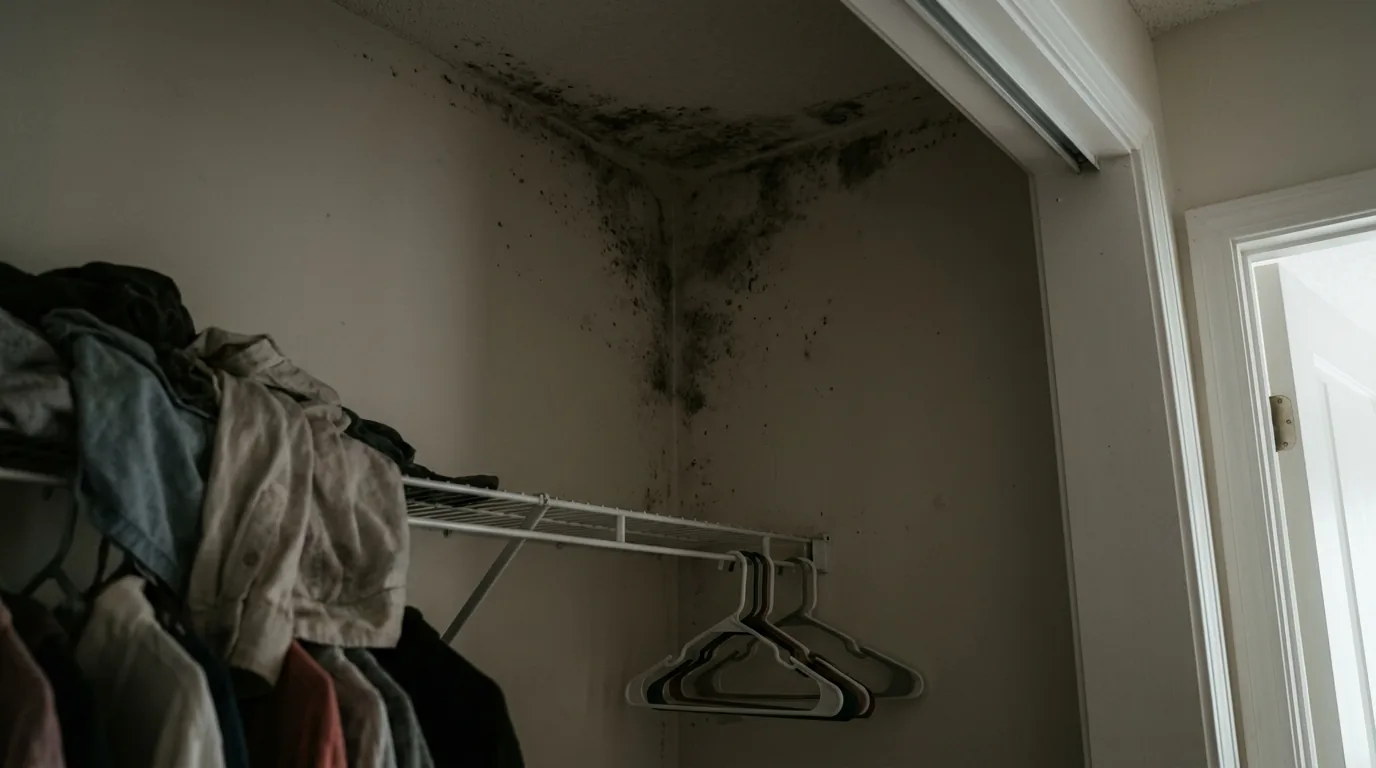
- Closets on exterior walls. Dark, unventilated, packed with clothing that blocks airflow against a surface that is already the coolest in the room. This is the single most common location.
- Behind furniture pushed flat against an exterior wall. A headboard or a dresser against the north wall creates a dead air pocket with the same effect.
- Window frames and sills, particularly on single-pane aluminum windows, which conduct cold straight through and condense readily.
- Bathrooms with a fan that vents into the attic rather than outdoors, or with no fan at all. This one is installation, not climate, and it is common in older coastal housing stock.
- The underside of rugs and furniture on slab floors. Concrete runs cooler than room air and wicks ground moisture.
- Garages and laundry areas, where a dryer vent that has come loose discharges humid air directly into the structure.
What actually controls it
- Keep indoor relative humidity between 30 and 50 percent. A twenty-dollar hygrometer in the problem room tells you whether you have a humidity problem or a leak you have not found. Buy the meter before you buy anything else.
- Run bathroom fans during showers and for twenty to thirty minutes afterward, and confirm the fan actually vents outside. Many do not.
- Use the kitchen hood when cooking, and make sure it is ducted rather than recirculating.
- Pull furniture a few inches off exterior walls. This sounds trivial and it is one of the most effective changes available.
- Leave closet doors open on exterior walls, and do not pack them wall to wall. Air movement is doing real work here.
- Run a dehumidifier in persistently damp rooms during marine layer season. Set it to maintain 45 to 50 percent rather than running it continuously.
- Do not seal a house tighter without adding ventilation. New windows on an older coastal home frequently trade a draft problem for a condensation problem.
- Check the dryer vent run. A disconnected or crushed duct puts gallons of water vapor a week into the structure.
When it is still worth a professional inspection
Humidity management handles the surface growth that recurs in a closet corner. It does not resolve two situations.
The first is growth inside the wall assembly. If the drywall is stained, soft, or bulging, or if the smell is present with no visible growth anywhere, the moisture is behind the surface and a visual inspection cannot characterize it. That requires moisture mapping and, often, a cavity inspection — which is what mold inspection and mold testing are for.
The second is a genuine hidden leak that happens to be in a coastal home, where it is easy to attribute to humidity and leave alone. Our post on signs of mold behind walls covers how to tell the difference, and is black mold dangerous addresses the question most people actually want answered.
Frequently asked questions
- Can mold really grow without a leak?
- Yes. Sustained high humidity and surfaces cool enough to condense are sufficient on their own. This is the normal mechanism in coastal climates and it is why a plumbing inspection can come back entirely clean on a home with an active mold problem.
- What humidity level should I keep my house at?
- Between 30 and 50 percent relative humidity indoors. Below 60 percent is the threshold where sustained growth becomes unlikely, and keeping a margin below that accounts for the fact that a cool exterior wall surface is more humid than the middle of the room.
- Will bleach kill mold on drywall?
- Not usefully. Bleach is mostly water and it removes the visible staining from a porous surface while leaving the growth within the material and adding moisture. On a hard non-porous surface like tile it is reasonable. On drywall, paper-faced gypsum, or wood, surface treatment is cosmetic — and if the humidity conditions remain, it returns.
- Does a dehumidifier fix the problem permanently?
- It controls the condition as long as it runs and is sized for the space. It is a management tool, not a repair. If the underlying cause is a bath fan venting into the attic or a disconnected dryer duct, fixing that is permanent and cheaper.
- Is this covered by homeowners insurance?
- Usually not. Mold arising from ambient humidity and maintenance conditions is typically excluded, whereas mold resulting from a covered sudden water loss is often covered up to a sublimit. This is one more reason to establish whether you have a humidity problem or an undiscovered leak.
Get the moisture question answered
Gallagher Restoration Co. inspects and remediates mold across Riverside, San Bernardino, Orange, and San Diego counties, with crews dispatching from Canyon Lake and satellite offices in Huntington Beach and Carlsbad. Family-owned, IICRC-trained, CSLB #1061640. If you have growth that keeps coming back, call (951) 541-0034 or request an assessment — finding the moisture source is the part that makes the remediation hold.