
“Toxic black mold” is the most searched and least useful term in the mold world. Here is what public health agencies actually say about health effects, why color tells you almost nothing, and what genuinely matters.
Search “black mold” and you will find claims ranging from mild irritation to neurological damage. The honest answer sits well short of the alarming end — and it also does not mean mold in your home is fine. What follows is what public health agencies actually say, stripped of both the panic and the dismissal.
“Black mold” is not one thing
The term usually refers to Stachybotrys chartarum, a greenish-black mold that grows on cellulose-rich material — drywall paper, cardboard, wood — that has been wet for an extended period. But dozens of common indoor molds appear black or dark green, including Cladosporium, Aspergillus niger, and Alternaria. You cannot identify a species by looking at it, and a lab result telling you which one you have very rarely changes what needs to happen next.
What health agencies actually say
The CDC's position on mold and health is measured: exposure to damp and moldy environments may cause a variety of health effects, or none at all. Documented effects in sensitive people include stuffy nose, sore throat, coughing or wheezing, burning eyes, and skin rash. People with asthma or a mold allergy may react more severely. Immune-compromised people and people with chronic lung disease can develop lung infections.
What the agencies do not endorse is the broader set of claims attached to the phrase “toxic mold.” Stachybotrys can produce mycotoxins under certain growth conditions, but producing a toxin in a petri dish is a different question from delivering a meaningful dose to a person through indoor air. That link — everyday indoor exposure causing severe systemic illness in otherwise healthy adults — is not established in the way the internet often implies.
Why that does not make it harmless
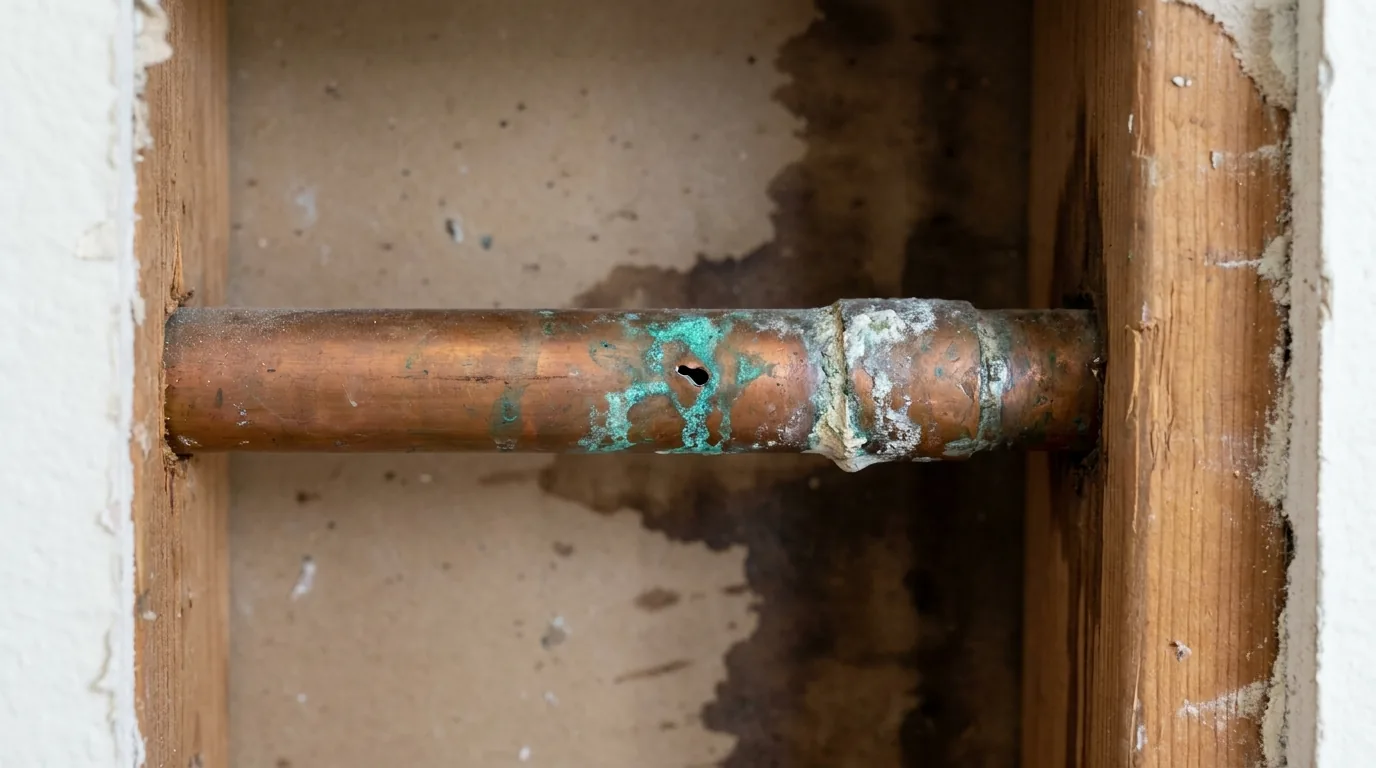
Two things are true simultaneously. First, the worst claims about black mold are not supported. Second, the CDC recommends removing any mold you find regardless of type — and there is a practical reason for that beyond the mold itself. Visible mold growth is proof of a chronic moisture problem, and chronic moisture in a building assembly causes damage of its own: rotted sheathing, corroded fasteners, degraded insulation, and structural decay that costs far more to fix than the mold does.
There is also a household-level question. A wall cavity colony is not a fixed exposure for everyone in the house. An adult with no allergies may notice nothing while a child with asthma reacts daily to the same air.
Symptoms people report
| Group | Commonly Reported Effects | Practical Note |
|---|---|---|
| Most healthy adults | Often nothing; sometimes mild nasal or throat irritation | Symptoms typically resolve away from the exposure |
| People with mold allergy | Congestion, sneezing, itchy eyes, skin rash | Reaction can be immediate and pronounced |
| People with asthma | Wheezing, chest tightness, increased inhaler use | Damp indoor environments can worsen asthma control |
| Immune-compromised individuals | Risk of fungal lung infection | Warrants a physician conversation, not just remediation |
| Infants and older adults | More sensitivity to respiratory irritants generally | Reduce exposure while remediation is scheduled |
If symptoms track with being at home and ease when you are away, that pattern is worth raising with a physician and worth investigating in the building. Our guide to the signs of mold behind walls covers what to look for structurally.
Why testing usually is not the first step
The CDC does not generally recommend mold testing for the common case, and its reasoning is practical: health effects vary too much between individuals for a spore count to predict illness, there are no established safe exposure standards to compare a result against, and the remediation is the same regardless of species. If you can see it and you know where the water is coming from, testing mostly buys you a number you cannot act on.
Testing does earn its cost in specific circumstances — a real estate transaction, a landlord or HOA dispute, an insurance file that needs documentation, verifying a suspected problem in a location nobody can access, or post-remediation clearance to confirm the work succeeded. Those are the cases our mold testing services exist for. For everything else, the higher-value step is a moisture-focused mold inspection.
What actually resolves it
- Find and fix the water. Remediation without correcting the moisture source fails, every time.
- Contain the work area with plastic barriers and negative air pressure so spores are not distributed through the house during removal.
- Remove porous materials that are colonized — drywall, insulation, carpet pad. These are not cleaned; they are discarded.
- Clean and treat salvageable non-porous surfaces, and HEPA-vacuum the area.
- Dry the assembly to a verified moisture standard before anything is closed back up.
- Rebuild, and address the underlying condition — ventilation, drainage, grading, or plumbing — so it does not recur.
That sequence is what professional mold remediation means, and steps 2 and 5 are the two most commonly skipped by cheap bids. Our mold remediation cost guide for California breaks down what each stage typically adds.
A note on Southern California specifically
Our low outdoor humidity misleads people into thinking mold is not a regional issue. It is — the moisture just comes from inside rather than outside. Slab leaks under Menifee and Murrieta tract housing, AC condensate lines backing up into attics through the summer, tightly sealed newer construction that traps interior humidity, and the coastal marine layer through Orange County and San Diego County all create sustained damp conditions inside assemblies while the air outside stays dry.
Frequently asked questions
- Can black mold kill you?
- There is no credible support for the claim that ordinary household black mold exposure is fatal to otherwise healthy people. The documented risks are respiratory and allergic — and for people who are immune-compromised or have chronic lung disease, the risk of fungal infection is real and worth taking seriously with a physician.
- Is black mold worse than other mold?
- Not in a way that changes what you do. Any mold growing indoors indicates a moisture problem, and the removal process is the same regardless of species. Color is not a reliable indicator of species, and species is not a reliable indicator of individual risk.
- Can I clean black mold myself with bleach?
- For a small area of non-porous surface — tile, glass, sealed countertop — household cleaning is reasonable. Bleach on porous material such as drywall or wood is counterproductive: the water carries into the substrate while the disinfectant stays on the surface, so the colony inside is fed rather than killed. For anything beyond about ten square feet, or anywhere the source is unknown, professional containment is the right call.
- How quickly does mold grow after water damage?
- Given the right material and temperature, growth can begin within 24 to 48 hours of the material becoming wet. That window is why professional drying is treated as an emergency service rather than a scheduled one — see our restoration timeline guide.
Get a straight answer about your home
We would rather tell you there is nothing to worry about than sell you a job you do not need. Gallagher Restoration Co. is family-owned, IICRC-trained, and licensed under CSLB #1061640, serving four Southern California counties from Canyon Lake. Call (951) 541-0034 for 24/7 dispatch, or request an inspection.
This article summarizes publicly available guidance and is not medical advice. If you are experiencing health symptoms you believe are related to your home, talk to a physician.