Most household mold grows where you cannot see it — inside wall cavities, under flooring, above ceilings. These are the seven signals that show up first, and the two that mean stop and call someone.
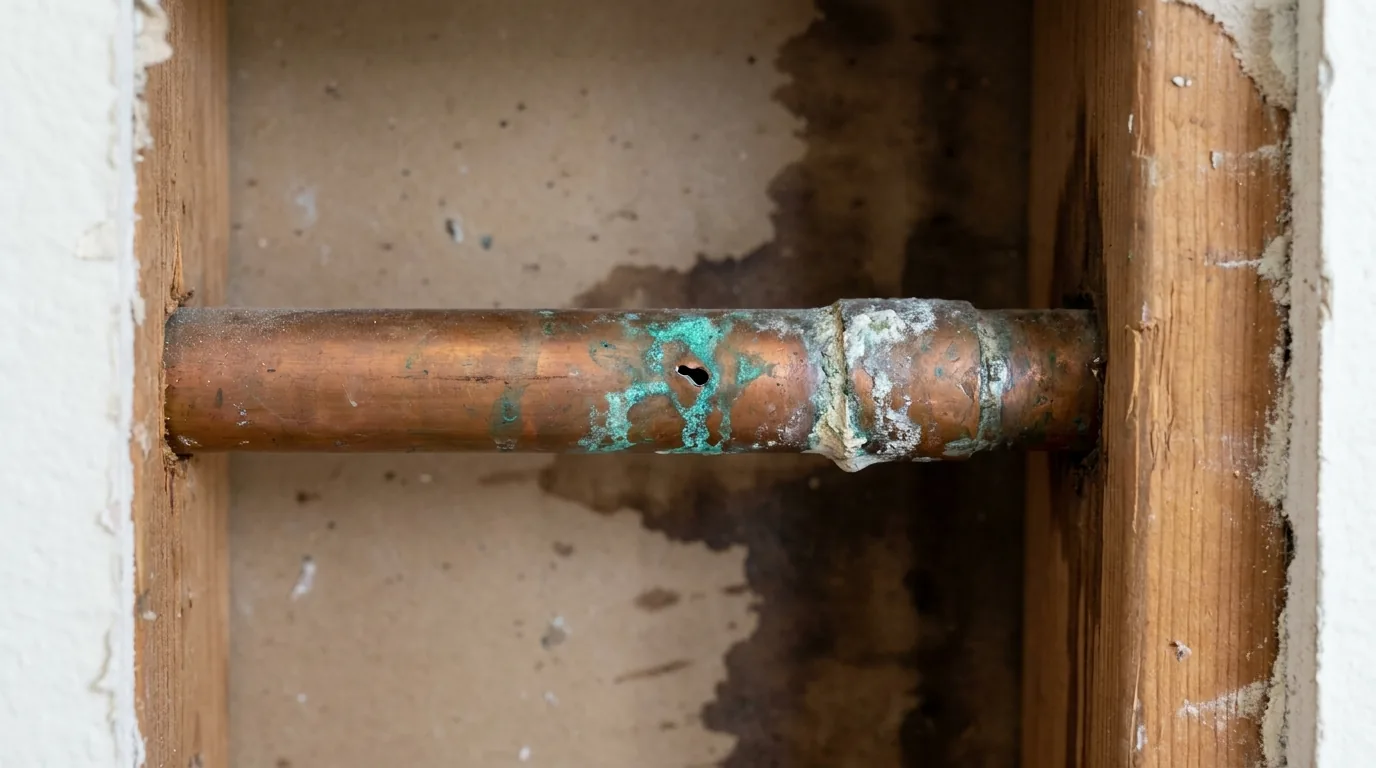
The mold you can see is rarely the problem. It is the indicator. By the time growth appears on the visible face of a wall, the colony behind it — feeding on paper-faced drywall in a dark, still cavity — is usually several times larger. Which means the useful skill is not identifying mold on a surface. It is recognizing the signals a wall gives off before anything is visible at all.
These are the seven we encounter most often in Southern California homes, roughly in the order they tend to appear.
1. A musty smell with no visible source
This is the earliest and most reliable signal. The smell comes from microbial volatile organic compounds released as mold metabolizes the material it is growing on — which means it passes through drywall long before growth does. If a closet, a bathroom, or one corner of a room smells earthy or like a damp basement and you cannot find the source, the source is very likely inside the assembly.
Two details help. The smell is usually stronger in enclosed spaces and after the house has been closed up — first thing in the morning, or when you return from a trip. And it often intensifies when the HVAC system runs, because air movement pulls cavity air into the room.
2. Paint or wallpaper that is doing something strange
Bubbling, peeling, cracking, or a section of wall that looks faintly rippled means moisture is behind the finish. Paint is a vapor-retarding layer; when the substrate behind it gets wet, the paint film separates. A single bubble the size of a coin, in the absence of any other explanation, is worth investigating.
3. Discoloration that bleeds rather than sits on the surface
A stain that has a soft, feathered edge and a faint yellow or brown tone is a water stain that came from inside. A hard-edged mark is usually surface contact. Look particularly at the bottom four inches of walls, at ceiling corners, and around window returns — the three places where moisture concentrates.
4. Symptoms that improve when you leave the house
Public health agencies are consistent that exposure to damp and moldy environments may cause a variety of health effects, or none at all — reactions vary widely between individuals, and someone with asthma or a mold allergy can react far more strongly than others in the same household. The location-dependent pattern is the diagnostic part, not the symptom itself. We look at what the research actually supports in is black mold actually dangerous.
5. Warped baseboard, soft drywall, or a floor that gives
Press on the drywall six inches above the floor along an exterior wall or a wet wall. Sound material is firm; material that has been damp is slightly spongy. Baseboard that has cupped or separated from the wall, and vinyl or laminate flooring that has developed a soft spot or a subtle dome, are all telling you the substrate below is holding water.
6. Condensation on the wrong surfaces
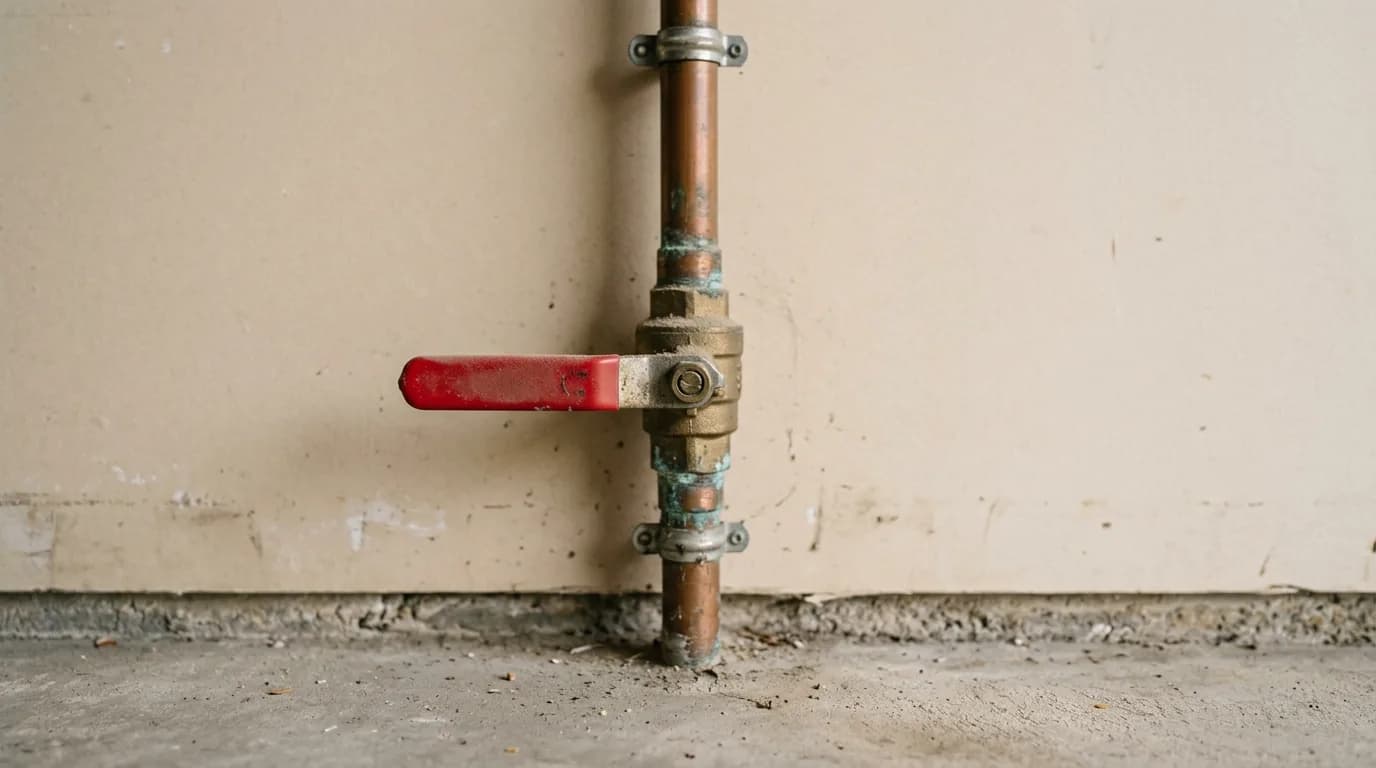
Persistent moisture on windows, on the inside face of an exterior wall, or on the cold-water supply line under a sink means the indoor dew point is high enough for water to condense on cool surfaces. That same condensation is happening inside wall cavities where the surfaces are cooler still. This is a common pattern in coastal Huntington Beach, Oceanside, and Carlsbad homes during the marine layer months.
7. A water event in the last two years that was never properly dried
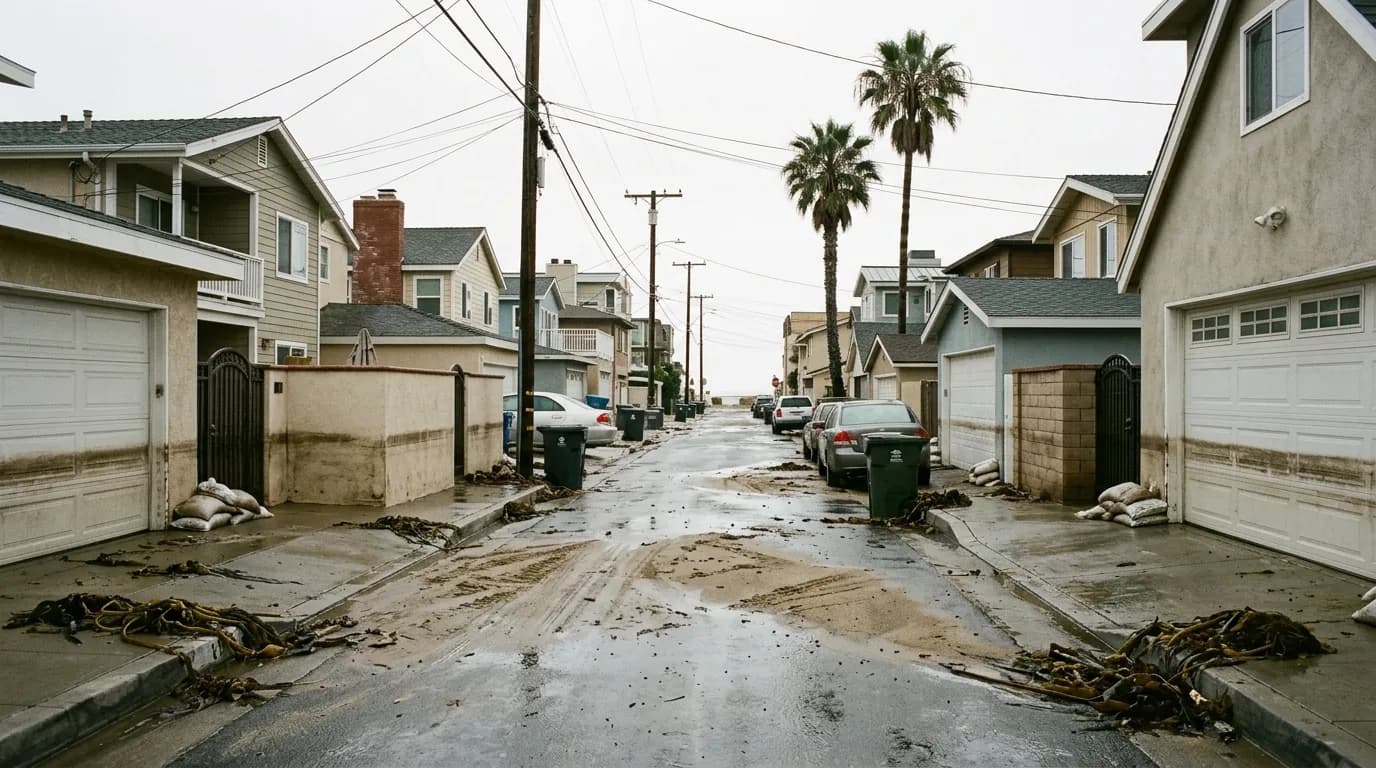
This is the most predictive of all seven. A dishwasher that overflowed, an AC condensate leak, a slow toilet supply drip, a roof leak during a February storm — anything that was mopped up and forgotten. The EPA's Brief Guide to Mold, Moisture, and Your Home is explicit that the key to mold control is moisture control, and that water-damaged areas should be dried within 24 to 48 hours. Past that window, growth is likely already established, whether or not anyone can see it.
Where hidden mold actually grows in SoCal homes
| Location | Usual Moisture Source | How It Is Typically Found |
|---|---|---|
| Behind bathroom walls | Failed shower pan, grout, or supply connection | Musty smell, soft drywall at base |
| Under kitchen sink cabinet | Slow drain or disposal leak | Warped cabinet floor, staining |
| Attic sheathing | Roof leak or inadequate ventilation | Discovered during HVAC or solar work |
| Below ceiling near air handler | Clogged AC condensate line | Ceiling stain — see our AC leak guide |
| Behind washing machine | Supply hose weep or drain standpipe overflow | Smell, and staining on adjacent wall |
| Wall cavities on a slab | Slab leak wicking up through bottom plate | Warm floor spots, high water bill |
What not to do
Do not cut open the wall to look. Opening a cavity with established growth releases spores into living space and turns a contained problem into a whole-house one. Do not spray bleach on visible growth on porous material — it drives moisture into the substrate and does not reach the colony behind it. And do not paint over a stain to see if it comes back; you will lose the visual indicator that tells you whether the leak is active.
What a professional inspection actually looks for
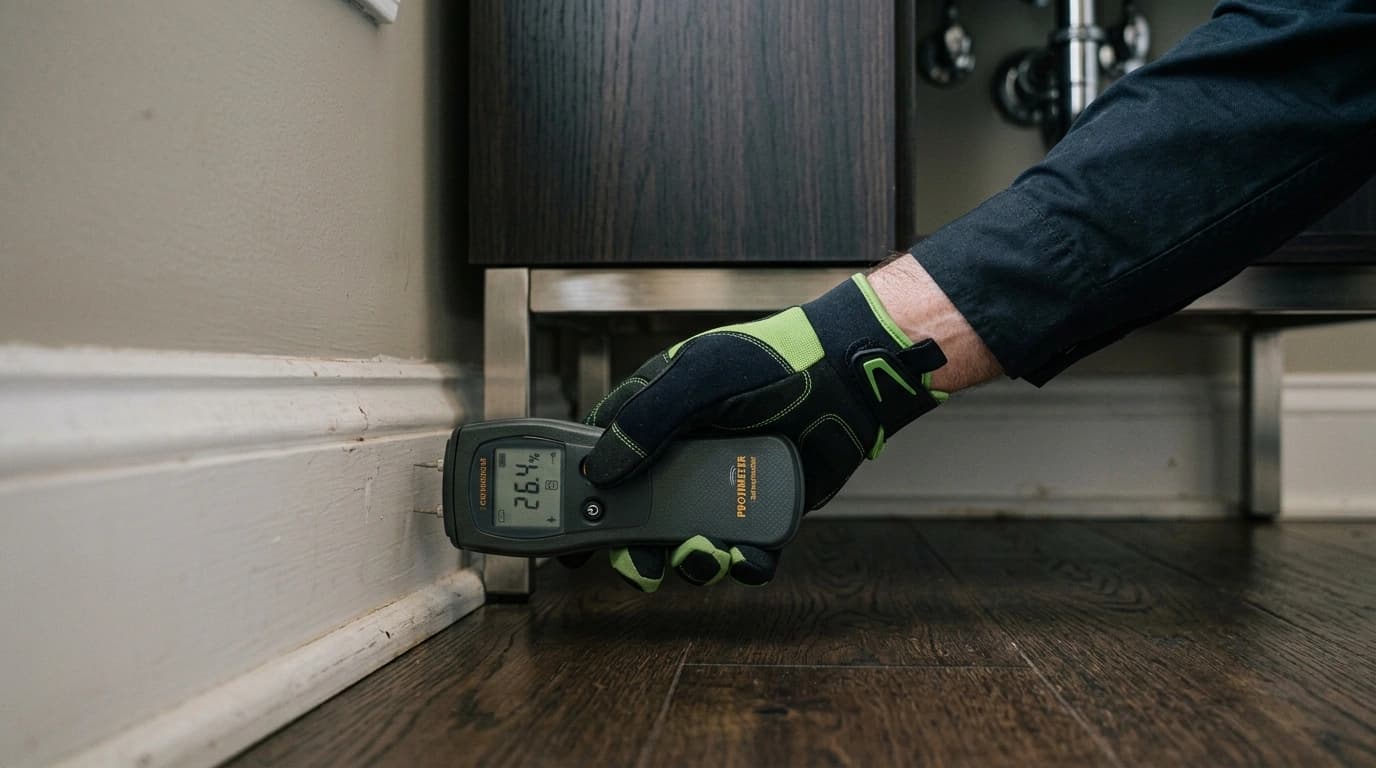
The tools are moisture-focused, not mold-focused: a pin and pinless moisture meter to map wet material through the finish, a thermal camera to find temperature differentials that indicate evaporation, a hygrometer to establish the building's baseline humidity, and where warranted, a borescope through a small drilled hole to look inside a cavity without demolishing it. Our mold inspection services follow that sequence deliberately — find the water first, because mold is the symptom and moisture is the disease.
When testing is warranted, mold testing documents what is present for a real estate transaction, a landlord dispute, an insurance file, or post-remediation clearance. When growth is confirmed, mold remediation handles containment, removal, and correction of the source. Our California mold remediation cost guide covers what each of those typically runs.
Frequently asked questions
- Can mold grow behind walls without any visible sign?
- Yes, and it commonly does. Wall cavities are dark and still, and paper-faced drywall is an ideal food source. Growth can persist for months or years with no visible indication on the finished face — smell and unexplained symptoms are frequently the only signals until the wall is opened for an unrelated reason.
- How do I check for mold behind a wall without cutting it open?
- A pinless moisture meter reads through the surface and identifies elevated moisture in the substrate, and a thermal camera shows cooler regions where evaporation is occurring. A borescope inserted through a small hole gives visual confirmation with minimal disturbance. All three are non-destructive relative to opening the wall, and all three are standard on a professional inspection.
- Does a musty smell always mean mold?
- Not always — sewer gas from a dry P-trap, a dead rodent in a cavity, and standing water in a crawlspace can all produce comparable odors. But a persistent earthy, damp smell that concentrates in one area and strengthens with humidity or HVAC operation points to microbial growth more often than not.
- Should I test for mold before removing it?
- For visible growth with a known moisture source, testing usually is not necessary — the CDC's position is that mold should be removed regardless of type, so species identification rarely changes the remediation plan. Testing earns its cost in specific situations: documenting a dispute, confirming a suspected but unlocated problem, verifying clearance after remediation, or supporting a health-related claim.
If you smell it, get it looked at
Gallagher Restoration Co. inspects for hidden moisture and mold across Riverside, San Bernardino, Orange, and San Diego counties from our Canyon Lake headquarters — IICRC-trained, family-owned for more than 15 years, CSLB #1061640. We will tell you plainly if there is nothing there. Call (951) 541-0034 or request an inspection.