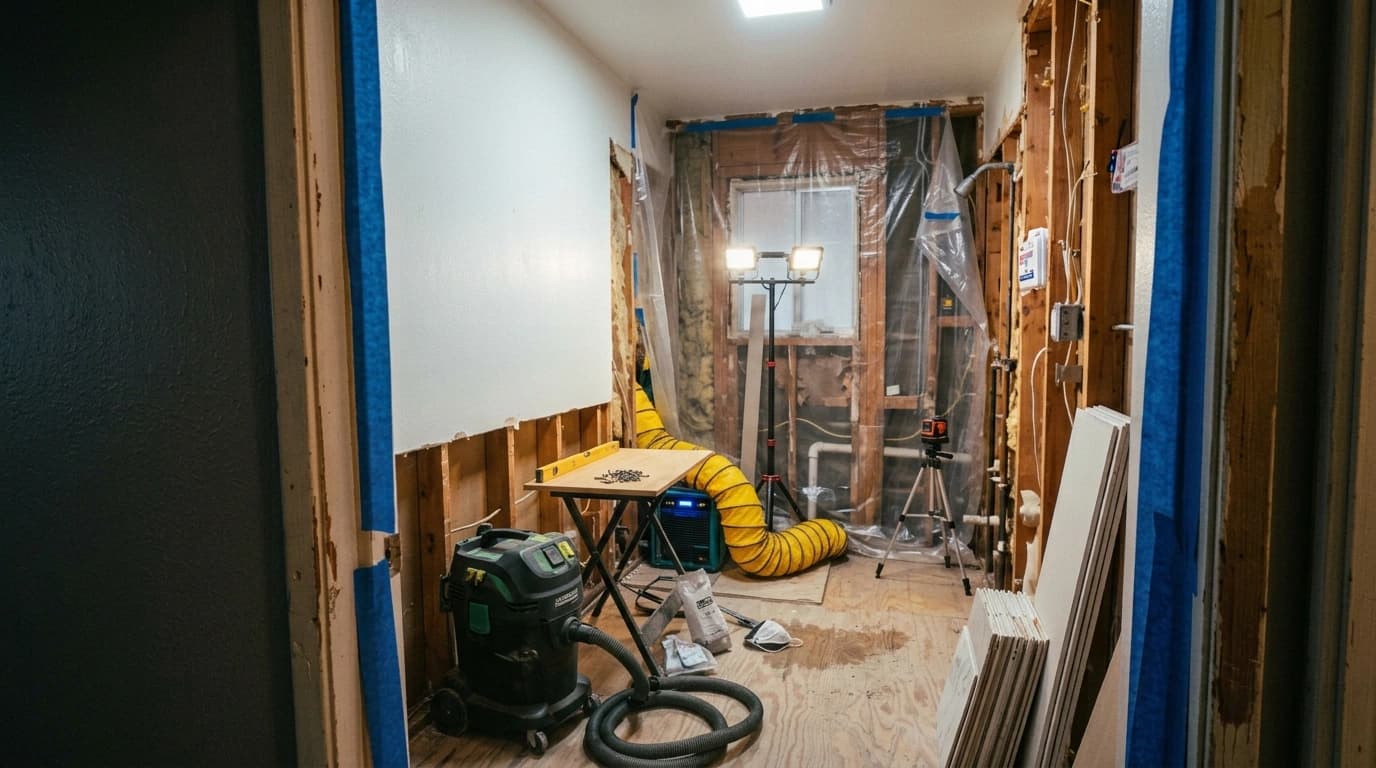
Mold remediation in Southern California typically costs $1,500–$6,000 for most residential jobs. Here is what drives the price up or down — and how to get an honest estimate.
Mold remediation in Southern California typically costs $1,500 to $6,000 for most residential jobs, though heavily affected attics, crawlspaces, or HVAC systems can push that figure above $10,000. The wide range comes down to four things: how much surface area is affected, whether the moisture source has been fixed, how much building material needs to come out, and whether testing is required before work begins. This guide breaks down current SoCal pricing by scope and room, explains what drives costs higher, and tells you exactly when your homeowners insurance is likely to pay — and when it won’t.
Mold remediation cost by scope of work
The single biggest cost driver is how many square feet of affected material the crew has to contain, treat, and remove. Here are honest ranges for the Southern California market in 2026.
| Scope | Typical Affected Area | Estimated Cost Range |
|---|---|---|
| Small — surface mold, single spot | Under 10 sq ft | $300 – $800 |
| Medium — bathroom, closet, or wall cavity | 10–50 sq ft | $1,000 – $3,500 |
| Large — whole room or multiple rooms | 50–200 sq ft | $3,500 – $6,500 |
| Whole-home or structural | 200+ sq ft | $6,500 – $15,000+ |
Note: these ranges assume the moisture source has already been corrected. If an active leak or drainage problem still exists, costs climb because the contractor must coordinate with a plumber or roofer first — and any remediation done before the source is fixed is likely to fail.
Mold remediation cost by room
Different rooms carry different price tags because of access difficulty, the materials involved, and how far mold typically spreads before it’s found.
| Room or System | Typical Cost Range | Notes |
|---|---|---|
| Bathroom | $700 – $2,500 | Grout, drywall behind tile, and subfloor are common targets. Tile removal adds cost. |
| Kitchen | $1,000 – $3,000 | Under-sink areas and behind dishwashers are frequent problem spots. Cabinet removal may be needed. |
| Attic | $2,000 – $7,000 | The most common and expensive location in SoCal due to roof leaks and inadequate ventilation. Structural sheathing is often involved. |
| Crawlspace | $2,500 – $6,500 | Rare in most of SoCal but present in older Riverside County homes. Difficult access and vapor barrier replacement add to cost. |
| Basement | $1,500 – $5,000 | Uncommon in Southern California. When present, seepage from hillside lots is usually the cause. |
| HVAC ductwork | $3,000 – $10,000+ | Mold in ducts spreads spores through every room. Full duct cleaning, treatment, or replacement can be required. |
Factors that affect mold remediation cost
No two jobs are identical. Here are the variables that move the price in either direction.
- Mold type. Most household mold (Cladosporium, Penicillium, Aspergillus) is handled with standard protocols. Black mold (Stachybotrys chartarum) requires more aggressive containment and protective equipment, which adds labor cost.
- Severity of the moisture source. A slow drip behind drywall that went undetected for months causes far more damage than a pipe burst caught in 24 hours.
- Drywall and structural removal. When mold penetrates past the surface into drywall, insulation, or wood framing, affected material must come out. Drywall replacement alone runs $2–$4 per square foot before finishing.
- HVAC involvement. If mold has reached the air handling system or ductwork, every room in the house is at risk. Remediation plus duct cleaning or replacement adds significant cost.
- Pre-remediation testing. Air quality testing and surface sampling to confirm the species and extent typically costs $300–$700. Many contractors require it before starting work.
- Post-remediation clearance testing. A third-party inspector verifies the job is complete. Budget $200–$400 for this — it’s worth it to protect the investment.
- Accessibility. Attics with low headroom, tight crawlspaces, and walls that require careful demo add labor hours.
- Permits and building codes. California requires permits for work that involves structural repair or exceeds certain thresholds. Riverside County and San Bernardino County permit fees vary; factor $150–$500 if structural work is involved.
- Temporary relocation. For whole-home jobs, occupants may need to leave during active remediation. This is not a contractor line-item but is a real cost to plan for.
- Contents pack-out. Furniture and personal property in the affected area may need professional pack-out and storage, adding $500–$2,000 depending on volume.
Does homeowners insurance cover mold remediation in California?
The short answer: it depends entirely on what caused the mold. California homeowners insurance generally follows this pattern.
Covered scenarios: a pipe bursts suddenly inside a wall, water soaks the drywall, and mold begins growing within days. Because the originating event (the burst pipe) is a covered peril, most standard HO-3 policies extend that coverage to resulting mold damage if you report it promptly. The same applies to mold that results from a roof leak caused by a covered storm event, or from an appliance that failed suddenly.
Not covered: mold caused by long-term humidity, chronic poor ventilation, a slow drip that was ignored for months, or a shower that was never properly waterproofed. Insurers classify this as maintenance neglect — and it is excluded from virtually every standard policy. Flood damage is also excluded unless you carry a separate NFIP or private flood policy.
Documentation matters more than most homeowners realize. A remediation company that photographs the moisture source, pulls moisture readings, and writes a detailed report gives your insurance adjuster the evidence they need. Our IICRC-trained team at Gallagher Restoration Co. documents every job to the standard insurers expect, which makes the claims process significantly smoother for our customers in Riverside, Orange, and San Diego counties.
Mold testing vs. mold remediation: what does each cost?
Testing and remediation are separate services with separate price tags — and it’s worth understanding the difference before you call anyone.
Mold inspection and testing: a certified inspector visually surveys the property, takes air samples and surface swabs, and sends them to a lab. Results identify the species present and the spore count in the air relative to outdoor baseline levels. Cost in Southern California: $300–$700 for a standard residential inspection. Results typically take 24–48 hours from the lab. Our mold inspection services page covers the full process in detail.
Mold remediation: the physical work of containing affected areas, removing contaminated material, treating surfaces with EPA-registered antimicrobial agents, and restoring the space. This is priced separately and is typically 5–10x the cost of testing. Do not let any contractor bundle testing and remediation without issuing separate line items — a conflict of interest exists when the same company both finds the mold and gets paid to remove it.
Do you need to test before you remediate? Not always. Visible mold covering more than 10 square feet can be addressed directly under EPA guidelines without prior testing. Testing becomes important when mold is suspected but not visible, when occupants have health symptoms, when the property is being sold, or when an insurance claim requires documentation of species and severity. See our mold testing services page for more on when testing adds real value.
Why mold in SoCal isn’t the same as mold in other states
Southern California’s dry reputation masks several local conditions that make mold a real and recurring problem.
Marine layer and coastal humidity: coastal communities in Orange County — Huntington Beach, Santa Ana, Irvine — and along the San Diego County coast sit under marine layer for significant portions of the year. Indoor humidity climbs without running AC or a dehumidifier, and poorly ventilated bathrooms or attics become mold incubators.
Attic ventilation failures: SoCal homes are built with lighter construction for a mild climate. Ridge vents and soffit vents are frequently blocked by insulation or pest damage. Our team sees attic mold on roof sheathing (typically a black staining of OSB or plywood) regularly throughout Riverside County — it develops quietly over years and is often discovered only during a home inspection or roof repair.
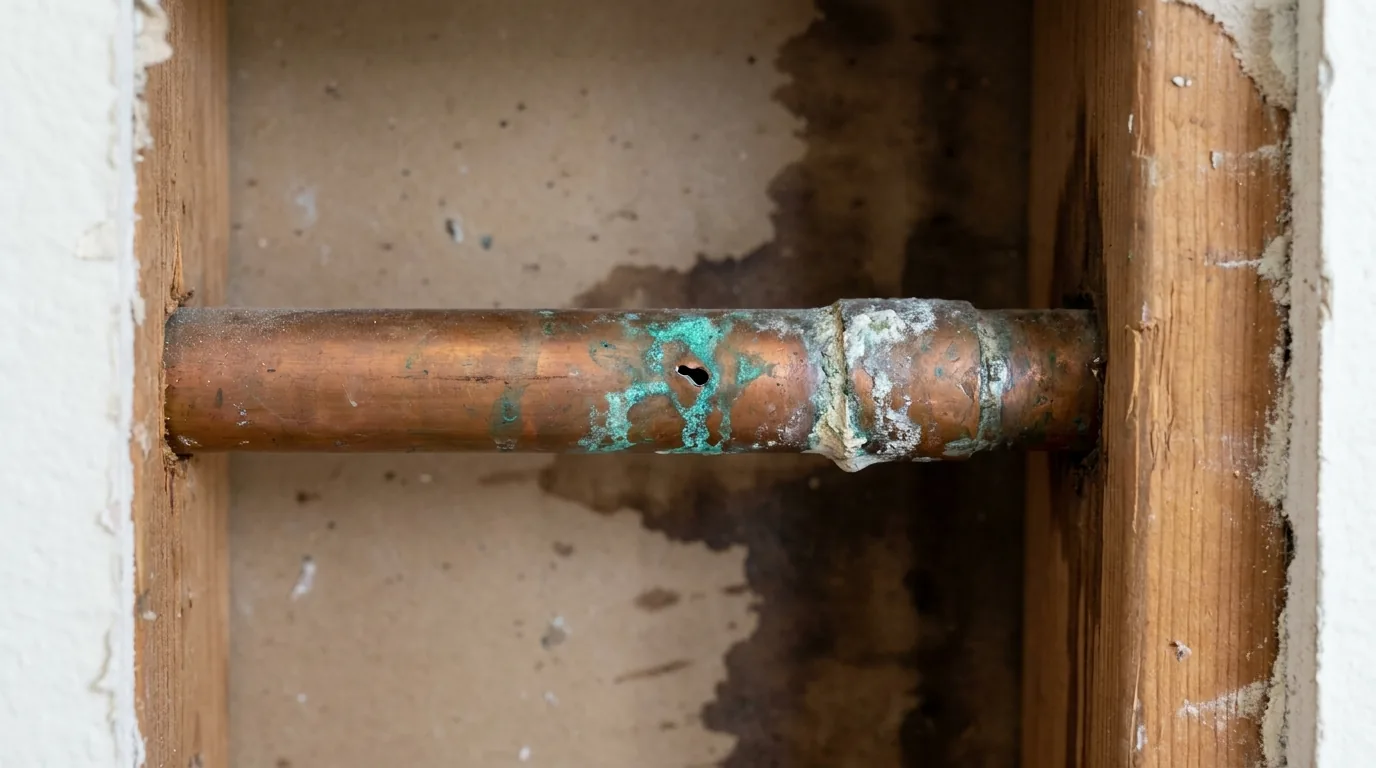
Older galvanized plumbing: Sun City and other communities with homes built in the 1960s and 1970s still have galvanized steel supply lines that corrode from the inside out. Pinhole leaks inside walls are common and often go undetected for months. By the time the drywall shows staining, mold is already established in the wall cavity.
Monsoon season moisture: late July through September brings elevated humidity from desert monsoon moisture pushing west. Homes that were sealed up tight all summer for AC efficiency can trap that humidity indoors during monsoon weeks, and any existing minor moisture problem accelerates fast. We serve homeowners across Riverside County, San Bernardino County, Orange County, and San Diego County — and monsoon season reliably increases mold calls across all four.
How to get an accurate mold remediation quote
Phone estimates for mold work are not reliable. Any contractor who quotes you a firm price over the phone without seeing the property is guessing — and that guess rarely protects you when the job is larger than expected.
Here is what an accurate quoting process looks like:
- In-person inspection first. A qualified technician physically examines the affected area, uses a moisture meter to map wet material, and looks for hidden damage behind walls or above ceilings before providing a scope of work.
- Written scope with line items. The estimate should break out containment, demo, disposal, treatment, and restoration as separate costs. A single lump-sum number makes it impossible to compare bids.
- Get 2–3 quotes. Mold remediation pricing in SoCal varies, and the cheapest bid is not always the safest choice. Look for IICRC certification, a valid CSLB license, and reviews from verified customers.
- Ask about post-remediation verification. A reputable company will recommend a third-party clearance test after the work is done. Be cautious of any contractor who says it isn’t necessary.
- Clarify what is not included. Mold remediation often stops at the point of drywall removal. Reconstruction — replacing drywall, painting, reinstalling tile — may be a separate contract.
Gallagher Restoration Co. provides in-person assessments with no obligation for homeowners across Southern California. Our IICRC-trained team carries CSLB License #1061640 and has been serving the region for more than 15 years. Call (951) 541-0034 any time — we dispatch 24/7 and aim to be on-site within 60 minutes.
Frequently asked questions about mold remediation cost
- How much does it cost to remove mold from an attic in California?
- Attic mold removal in California typically costs $2,000 to $7,000, depending on the extent of affected sheathing, the accessibility of the space, and whether structural wood needs to come out. SoCal attics with inadequate ridge or soffit ventilation are particularly prone to mold on OSB roof sheathing, and those jobs often run toward the higher end because the material must be treated or replaced rather than simply wiped down.
- Is mold remediation covered by homeowners insurance in California?
- Mold remediation is covered when the mold resulted from a sudden, covered peril — such as a burst pipe or storm damage — and you reported it promptly. It is not covered when mold resulted from long-term moisture, chronic humidity, or neglected maintenance. California policies vary, so review your specific policy’s mold sublimit; many cap mold coverage at $5,000–10,000 even when the cause is covered.
- Do I need to test for mold before remediation starts?
- Not always. Visible mold covering more than 10 square feet can be remediated directly under EPA guidelines. Testing is most valuable when mold is suspected but not visible, when occupants have unexplained health symptoms, when you need documentation for an insurance claim, or when the property is being bought or sold. A professional inspection — separate from remediation — is the right starting point when you’re unsure.
- Why is mold remediation so expensive?
- The cost reflects the labor intensity and safety requirements of the work. Crews must establish negative-pressure containment to prevent spores from spreading to clean areas, wear full PPE throughout, carefully remove and bag contaminated material, treat surfaces with EPA-registered antimicrobials, and dispose of debris as regulated waste. When drywall or structural wood is involved, reconstruction adds another layer of cost. Cutting corners on any of these steps risks recontamination — which is far more expensive than doing it right the first time.
- Can I remediate mold myself to save money?
- California’s EPA guidelines allow homeowners to address mold affecting fewer than 10 square feet using PPE, containment, and appropriate cleaning agents. Beyond that threshold — or any time mold is inside wall cavities, in HVAC systems, or affecting structural material — professional remediation is strongly recommended. DIY attempts on larger infestations frequently miss affected areas, spread spores through the house, and leave the moisture source unaddressed, resulting in recontamination within months.
- How long does mold remediation take?
- A single-room bathroom or closet job typically takes one to two days. Larger jobs involving attics or multiple rooms run three to five days for active remediation, plus drying time before reconstruction can begin. Whole-home jobs can run one to two weeks. Post-remediation clearance testing adds another 24–48 hours for lab results.
- How do I know if the mold remediation was done correctly?
- The most reliable verification is a post-remediation clearance test performed by an independent third-party inspector — not the same company that did the remediation. The inspector takes air samples and compares indoor spore counts to outdoor baseline levels. A passing result confirms that mold levels have been reduced to an acceptable range. Any reputable remediation company will encourage this step.
- What is the difference between mold removal and mold remediation?
- ‘Mold removal’ is a marketing term. Mold spores are present in virtually every indoor environment — the goal of professional work is to reduce colony growth to normal, non-harmful levels and eliminate the conditions that allowed mold to proliferate. ‘Mold remediation’ is the industry-accurate term for that process, which includes source correction, containment, removal of contaminated material, antimicrobial treatment, and clearance verification.
Ready to get a straight answer on your mold situation?
Gallagher Restoration Co. serves homeowners across four Southern California counties from our Canyon Lake headquarters. We are IICRC-trained, family-owned with more than 15 years in the region, and licensed under CSLB #1061640. Our team is available 24 hours a day, 7 days a week, and can be on-site within 60 minutes of your call.
If you have visible mold or a moisture problem you cannot identify, the right first step is a professional inspection — not a phone estimate. Learn more about our mold inspection services or our full mold remediation process, or call (951) 541-0034 now to schedule an in-person assessment.