The same failed supply line costs a few hundred dollars when someone is home and tens of thousands when nobody is. Holiday travel season is when that difference gets collected.
Restoration work has a seasonal pattern, and one of the clearest spikes is the week after a holiday. Not because more things break — because of who is home when they do.
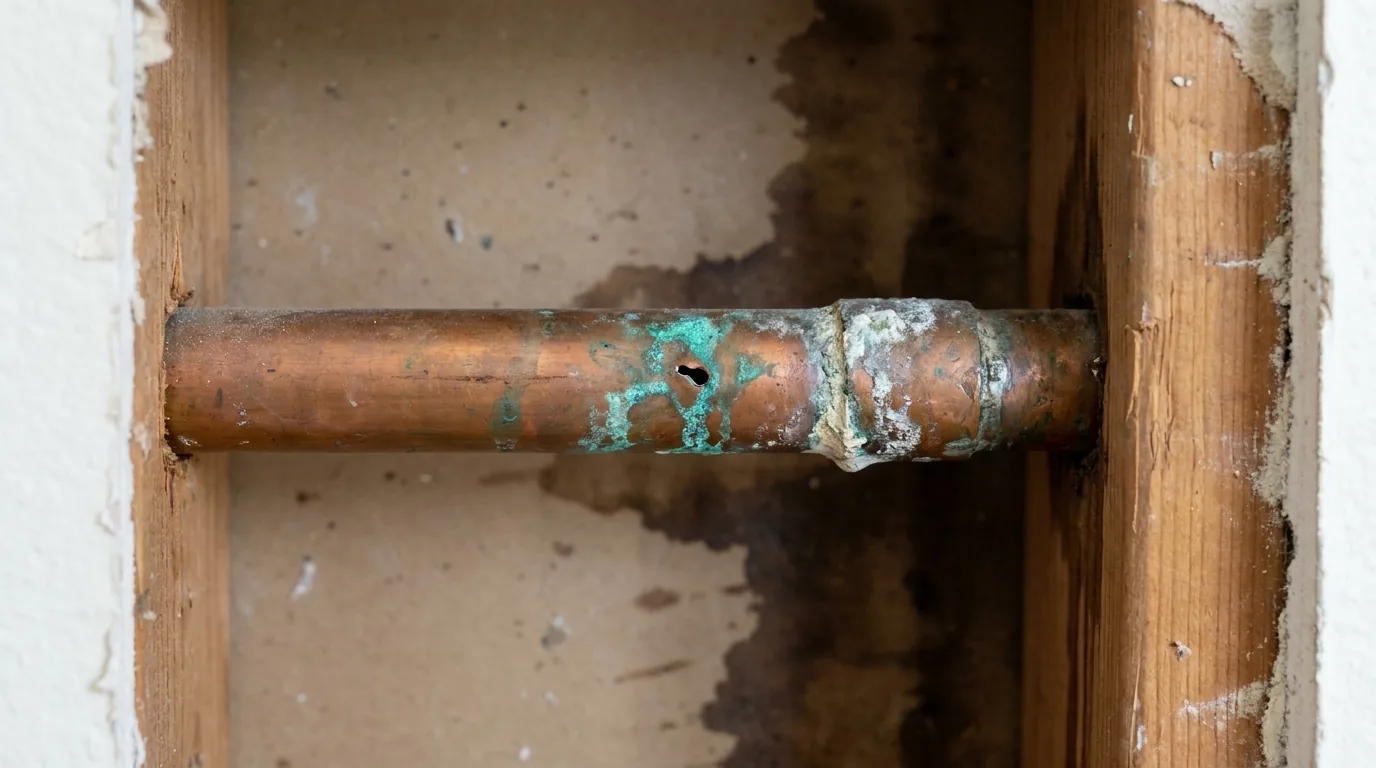
A washing machine supply hose that fails while someone is in the house is a wet laundry room, a closed valve, and an afternoon of cleanup. The same hose failing the morning after the family leaves for a week discharges continuously until someone walks in. We have arrived at houses where the water had been running for five days. At that point the question is not what got wet. It is what is left.
What makes an unattended leak so much worse
| Someone Home | House Empty a Week | |
|---|---|---|
| Water volume | Minutes of flow | Days of continuous flow |
| Water category | Usually Category 1, clean | Degraded to Category 2 or 3 by dwell time |
| Mold | Preventable with fast drying | Established, and in the wall cavities |
| Typical scope | Extract and dry in place | Demolition, remediation, and rebuild |
| Structural involvement | Rare | Subfloor, framing, and ceilings below |
Dwell time is the variable that drives all of it. Clean supply water does not stay clean sitting in a carpet pad against a drywall base for a hundred hours — it degrades, and as the category rises, materials that would have been dried in place become materials that have to come out. The mechanism is the same one described in water damage categories explained.
The one thing worth doing: close the main
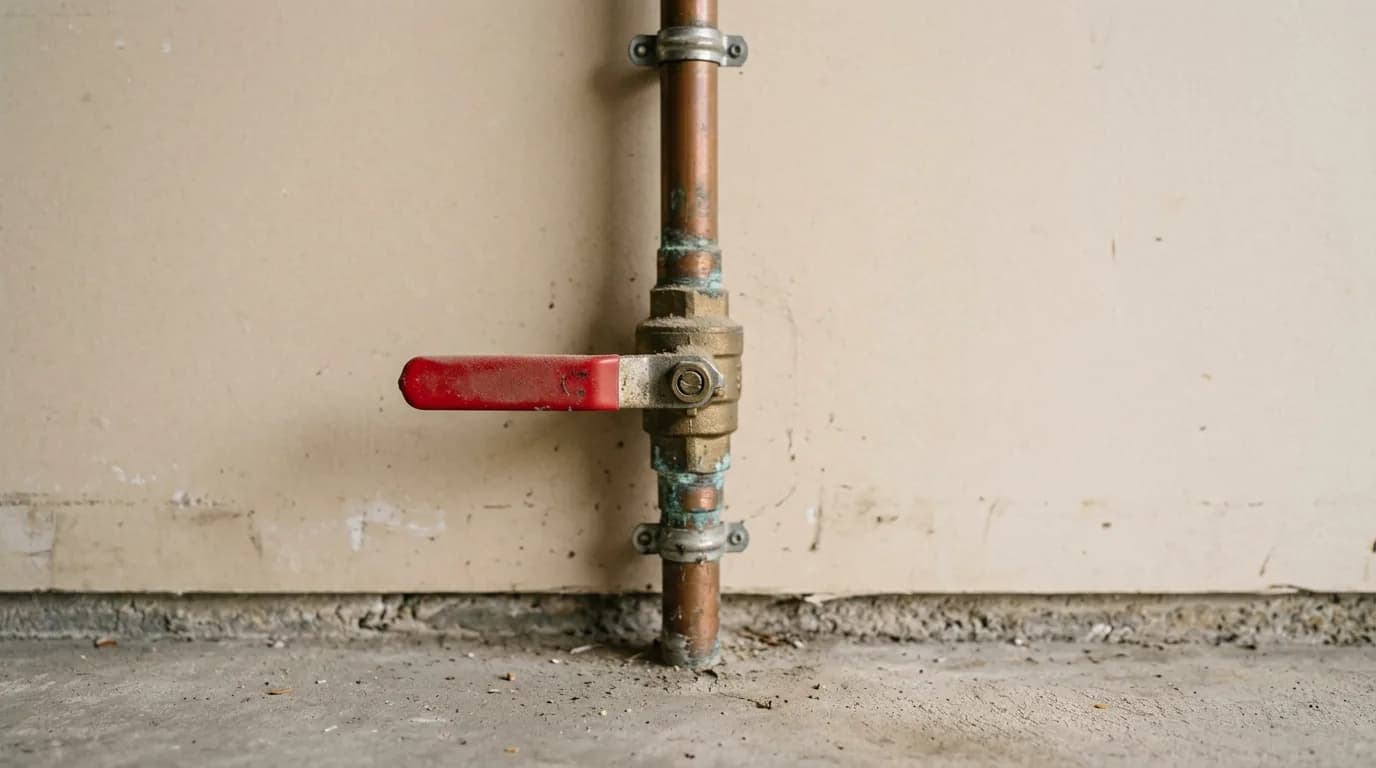
If you do nothing else on this page, shut off the water at the main before a trip of more than a couple of days. It eliminates every pressurized-supply failure mode at once — hoses, the water heater, toilet supply lines, pinhole leaks, the ice maker line, the hose bibb someone left half-open.
Two practical notes. First, find the valve and turn it now rather than at 5 a.m. on the way to the airport. Valves that have not moved in a decade can seize, and discovering that during an emergency is a bad time. If yours will not turn, have it replaced — that is a small plumbing job that pays for itself the first time it matters.
Second, if you have a fire sprinkler system, it may share the supply. Do not close a valve that feeds sprinklers. If you are not certain how your system is plumbed, close individual fixture and appliance valves instead.
The rest of the list
- Close the valves behind the washing machine, under the sinks, and at the refrigerator water line if you are not closing the main.
- Set the water heater to its vacation or pilot setting. Gas units have a vacation position on the control; electric units can go off at the breaker. If you closed the main, shut the heater down — it should not be heating with no supply.
- Set the thermostat rather than switching the HVAC off entirely. Something in the 60s keeps the house from swinging and keeps humidity in a reasonable range. A sealed house with no conditioning at all is how you come home to a musty smell.
- Empty the dishwasher and the washing machine, and leave both doors ajar. A damp sealed drum for ten days grows exactly what you would expect.
- Take the trash out and clear the refrigerator of anything that will turn. Obvious, routinely forgotten, and the source of a smell that takes real work to remove.
- Clear gutters and check that downspouts discharge away from the foundation. A storm while you are away is not the time for water running down the slab edge.
- Unplug electronics and small appliances. Fewer ignition sources and no surge exposure.
- Give a neighbor or a friend a key and ask them to walk through once mid-trip, not just collect the mail from the curb. Someone physically inside the house is the only thing that catches a problem in hours instead of days.
Leak detection is worth the money now
Smart water sensors have become inexpensive, and a whole-home shutoff valve that closes automatically on detected flow anomaly has come down enough that it is a reasonable purchase for most households. For the vacant-house scenario specifically, it is the only measure that limits a 5 a.m. failure to minutes rather than days.
Place point sensors under the water heater, behind the washing machine, under the kitchen sink, under each bathroom vanity, and under the refrigerator. Those five locations account for the large majority of residential water losses we respond to. Confirm the alerts actually reach your phone before you leave, and make sure they also reach whoever has your key — an alert nobody can act on is just a notification.
If you come home to it
- Shut off the water at the main before anything else.
- Do not walk into standing water if it has reached outlets or appliances. Kill the power at the breaker from a dry location first.
- Photograph everything before you move anything, including the water line on the walls and the contents of affected rooms.
- Do not run the HVAC system. If the water has been sitting, you will distribute contamination and moisture through the ductwork.
- Call for emergency extraction. On a multi-day loss the clock that matters is now, not the one that already ran.
- Notify your carrier the same day, and keep receipts for anything you spend on mitigation — reasonable mitigation costs are generally recoverable.
Expect the scope to be larger than it looks. Water that has been standing for days is in the wall cavities, under the cabinets, and in the subfloor, and a surface that feels dry tells you very little. Our guide to how long water damage restoration takes explains why the timeline on these is measured against documented moisture readings rather than against appearances.
Frequently asked questions
- Does homeowners insurance cover water damage while I am away?
- Usually yes for a sudden and accidental discharge, with an important caveat: many policies contain a vacancy or unoccupancy provision that can restrict coverage after a property has been unoccupied for an extended period, commonly measured in weeks rather than days. A normal vacation is not generally an issue. An extended absence, a second home, or a property between tenants is worth confirming with your broker in advance.
- Should I shut off the water for a weekend trip?
- For two or three days it is optional and still not a bad habit. For anything a week or longer it is the highest-value thing on the list, and it takes ten seconds once you know where the valve is.
- Will shutting off the water hurt anything?
- No, provided you also shut down the water heater so it is not trying to heat an isolated tank, and provided the valve does not also feed a fire sprinkler system. Expect some air in the lines when you turn it back on — run the fixtures for a minute.
- What temperature should I leave the thermostat at?
- Somewhere in the 60s is a reasonable compromise for Southern California. The goal is not comfort, it is avoiding a sealed, unconditioned house where humidity and temperature drift for a week or more.
Before you go
Gallagher Restoration Co. runs 24/7 dispatch for emergency water removal across Riverside, San Bernardino, Orange, and San Diego counties, with a 60-minute on-site target. Family-owned for more than 15 years, IICRC-trained, CSLB #1061640, direct carrier billing and daily documentation. If you come home to water, call (951) 541-0034 or request an assessment. Our winter preparation guide covers the rest of the season.