A tank water heater holds forty to eighty gallons and then keeps refilling. Here is how they fail, the warning signs that show up months early, and what the first hour should look like.
A tank water heater is the only appliance in most homes that holds forty to eighty gallons of water under supply pressure, all day, for a decade or more. When it fails, it does not leak the way a faucet leaks. It opens, empties, and then keeps refilling — because the supply line has no idea the tank is gone.
That is why water heater losses are consistently among the most damaging residential water claims we respond to across Riverside, San Bernardino, Orange, and San Diego counties. The volume is not forty gallons. It is forty gallons plus however many hours pass before someone closes the valve.
How water heaters actually fail
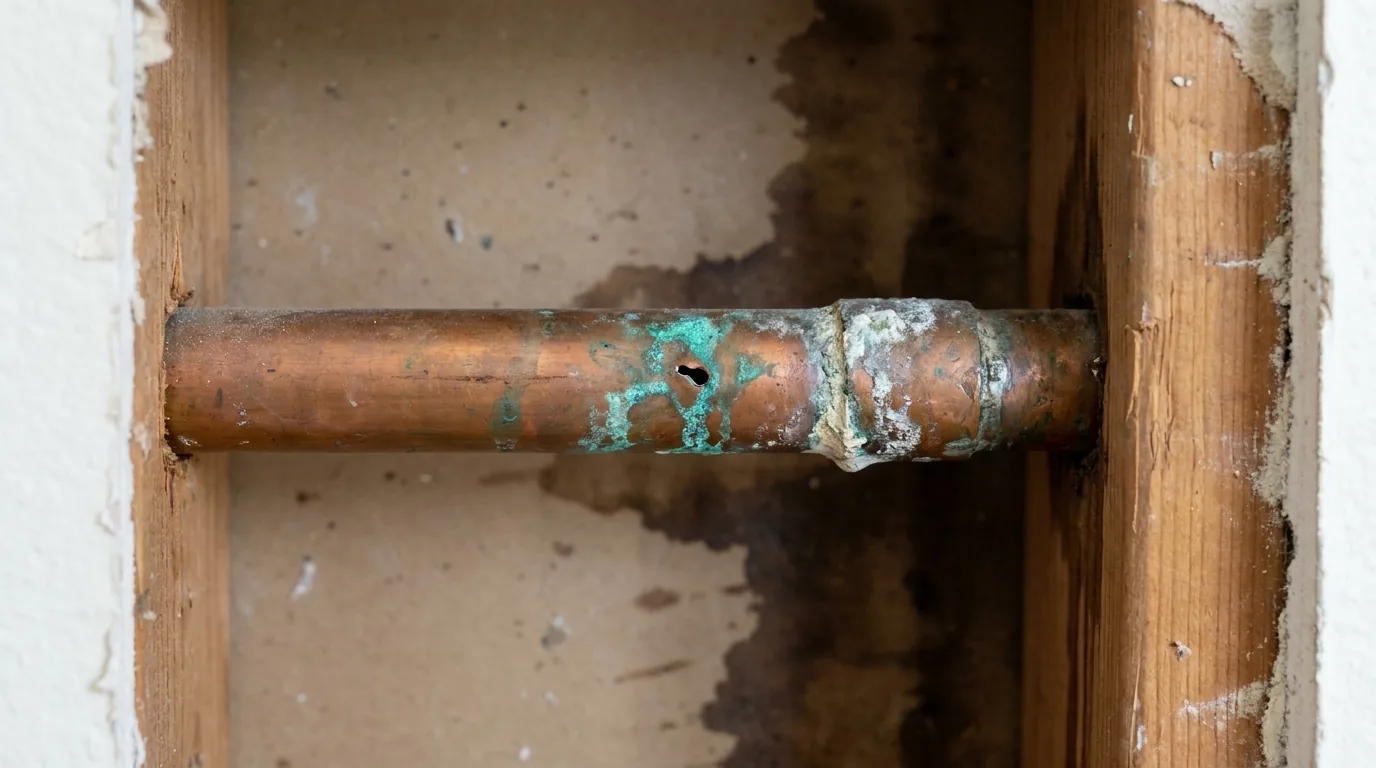
Tanks do not usually crack. They corrode from the inside out, and the failure point is almost always the bottom of the tank, where sediment collects.
A steel tank is protected by two things: a glass lining and a sacrificial anode rod that corrodes instead of the steel. The anode is consumable. Once it is spent — commonly somewhere between year three and year six, faster on hard water — the tank itself begins to corrode. Meanwhile, sediment from mineral-heavy water settles on the bottom, insulating the steel from the water above it and letting that section run hotter than it was designed to. Hot, unprotected, corroding steel eventually perforates.
Much of the Inland Empire runs hard water, which accelerates both halves of that process. A tank that might last twelve years elsewhere can be finished in eight here.
The warning signs, in the order they usually appear
- Rumbling, popping, or kettling sounds during a heating cycle. That is water boiling underneath a sediment layer. It is the earliest reliable sign and the one most people get used to.
- Rusty or metallic-tasting hot water, especially first thing in the morning, with cold water running clear.
- Recovery getting slower — the shower going lukewarm earlier than it used to, with no change in household usage.
- Moisture, rust staining, or mineral crust around the base of the tank or on the fittings.
- Water in the drip pan. Not a warning anymore. This is a tank that has already started to go.
- A relief valve that drips or discharges. Sometimes a failing valve, sometimes genuine over-pressure. Either way it is not something to ignore or cap.
Signs one through three are the ones worth acting on. By the time you reach five, you are choosing between a planned replacement this week and an unplanned one at an hour you did not pick.
Why the drip pan usually does not save you
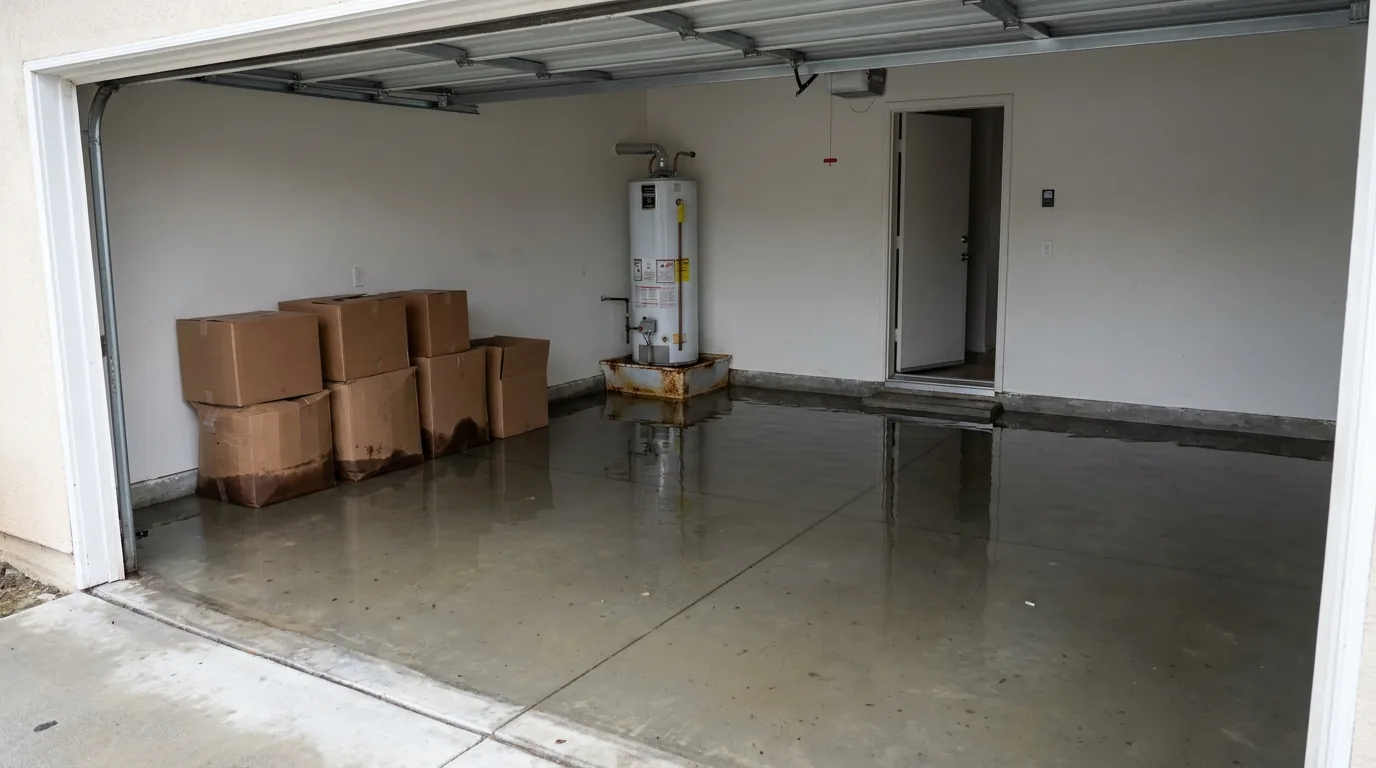
A drip pan is designed for a drip. It typically holds two or three gallons and drains through a small line — and in a lot of Southern California homes, especially garage installations, that line either was never run to a drain or terminates somewhere nobody has checked in years.
When a tank bottom lets go, the pan overflows in under a minute and then becomes irrelevant. It protects you from the slow failure, which is the one you would have caught anyway.
Where the tank sits determines what the loss costs
| Location | Typical Outcome | What Drives the Cost |
|---|---|---|
| Garage, on slab | Water spreads across the slab, under the door into the house | Drywall wicking, stored contents, shared wall into living space |
| Interior closet or hallway | Flooring, baseboards, and adjacent rooms saturate quickly | Flooring continuity, wall cavities, carpet pad and subfloor |
| Attic platform | Ceiling saturation, then collapse in the worst cases | Ceiling replacement, insulation, electrical, two floors affected |
| Upstairs utility closet | Water travels down wall cavities into the floor below | Two levels of finishes plus hidden cavity drying |
Attic installations are the ones worth checking proactively. The pan is further from anyone's attention, the drain line is longer and more likely to be clogged or disconnected, and by the time water appears on the ceiling below it has already been running for a while. Our guide to ceiling water damage covers what that looks like from underneath.
The first hour
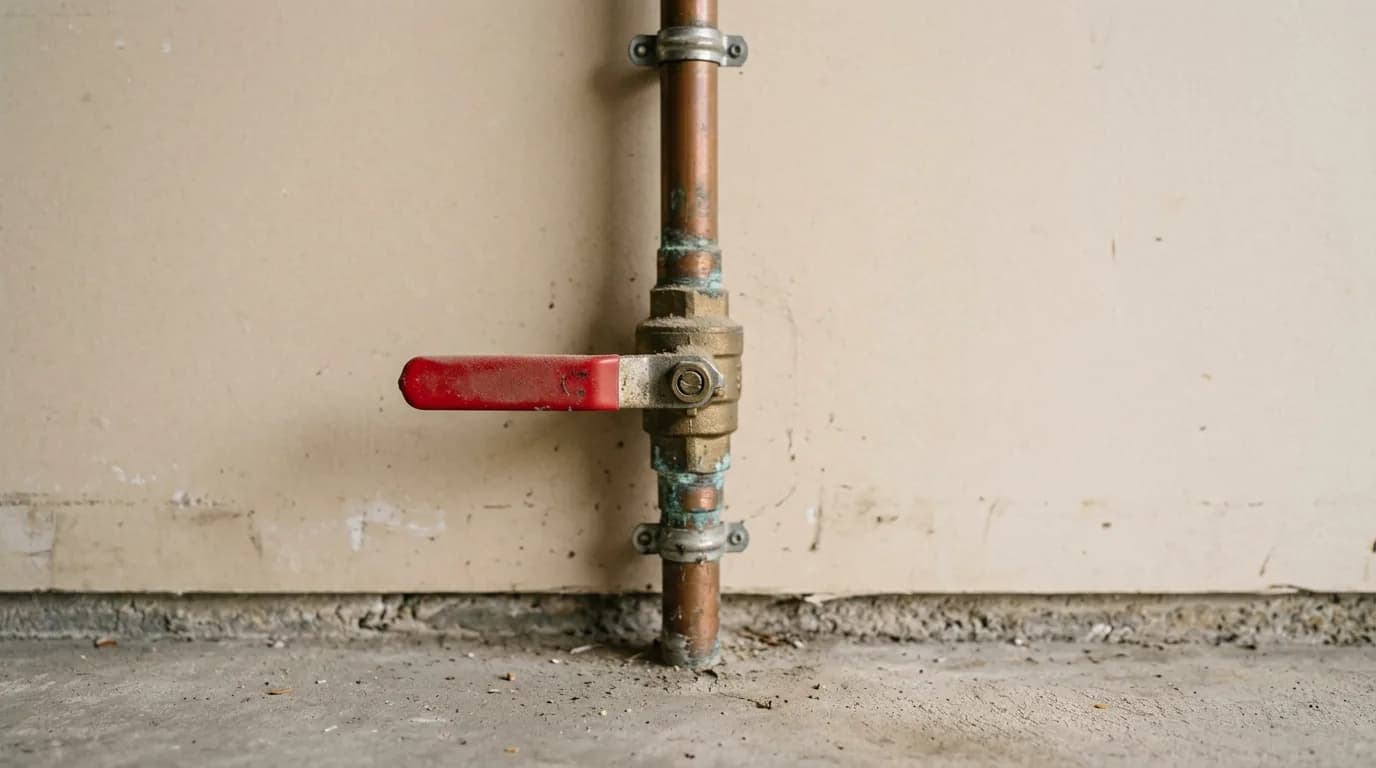
- Shut off the water. Use the cold inlet valve at the top of the heater if you can reach it safely; otherwise use the main shutoff for the house. Know where that is before you need it.
- Shut off the energy source. Gas: turn the control valve to off. Electric: switch off the breaker. Do not drain a tank with the burner or elements still live.
- Stop the spread if it is safe. Towels at the threshold, contents up off the floor, interior doors closed to limit where it travels.
- Do not enter standing water near energized outlets or appliances. If water has reached outlets or a panel, stay out and kill the circuit at the breaker first.
- Photograph everything before you move anything — the tank, the pan, the water line, affected rooms, wet contents. This is your claim.
- Call for extraction. Drying is a clock, not a task.
That last point is the one that costs people money. Clean supply water starts as Category 1 under industry standard, but it degrades as it sits and contacts building materials and contents. The longer the dwell time, the more likely the scope shifts from drying materials in place to removing them. We cover that progression in water damage categories explained, and the hour-by-hour reasoning in how long water damage restoration takes.
What prevents this
- Know the age of your tank. The manufacture date is encoded in the serial number on the data plate. Past ten years on hard water, you are on borrowed time.
- Flush the tank annually to clear sediment, and have the anode rod inspected. A new anode is inexpensive relative to a new tank, and dramatically cheaper than a flood.
- Confirm the pan has a drain line and that the line actually goes somewhere. Pour a bucket in and watch.
- Install a leak detector with an automatic shutoff valve. These have come down in price considerably and they address the real problem, which is the refill, not the first forty gallons.
- Replace proactively rather than reactively. A planned replacement is a scheduled appointment. An unplanned one is a restoration claim with a water heater attached.
Frequently asked questions
- Does homeowners insurance cover a water heater failure?
- Most policies cover the resulting water damage — the flooring, drywall, and contents — while excluding the failed appliance itself, on the reasoning that the tank wore out rather than being damaged by a covered peril. Sudden and accidental discharge is the language to look for. Long-term seepage that was visible and ignored is where carriers push back. Our post on whether homeowners insurance covers water damage in California goes through the distinctions.
- How long does a water heater last in Southern California?
- Eight to twelve years for a standard tank, with hard water pushing toward the lower end of that range. Tankless units generally last longer but need descaling on a schedule, and in hard-water areas skipping that service shortens their life substantially.
- My water heater is leaking a little. Can I wait?
- If the water is coming from a fitting or the relief valve, possibly — those are repairable. If it is seeping from the body of the tank or pooling underneath it, no. A perforated tank does not reseal, and the failure mode from there is sudden.
- Should I turn the water back on after the tank is drained?
- Not until the heater is isolated or replaced. If you need household water in the meantime, close the valves on the heater itself and open the main, rather than leaving the whole house dry.
If it already happened
Gallagher Restoration Co. runs 24/7 dispatch for emergency water removal across Riverside, San Bernardino, Orange, and San Diego counties, targeting 60 minutes on-site. We are family-owned, IICRC-trained, licensed under CSLB #1061640, bill carriers directly, and provide daily moisture documentation. Call (951) 541-0034, or request an assessment.