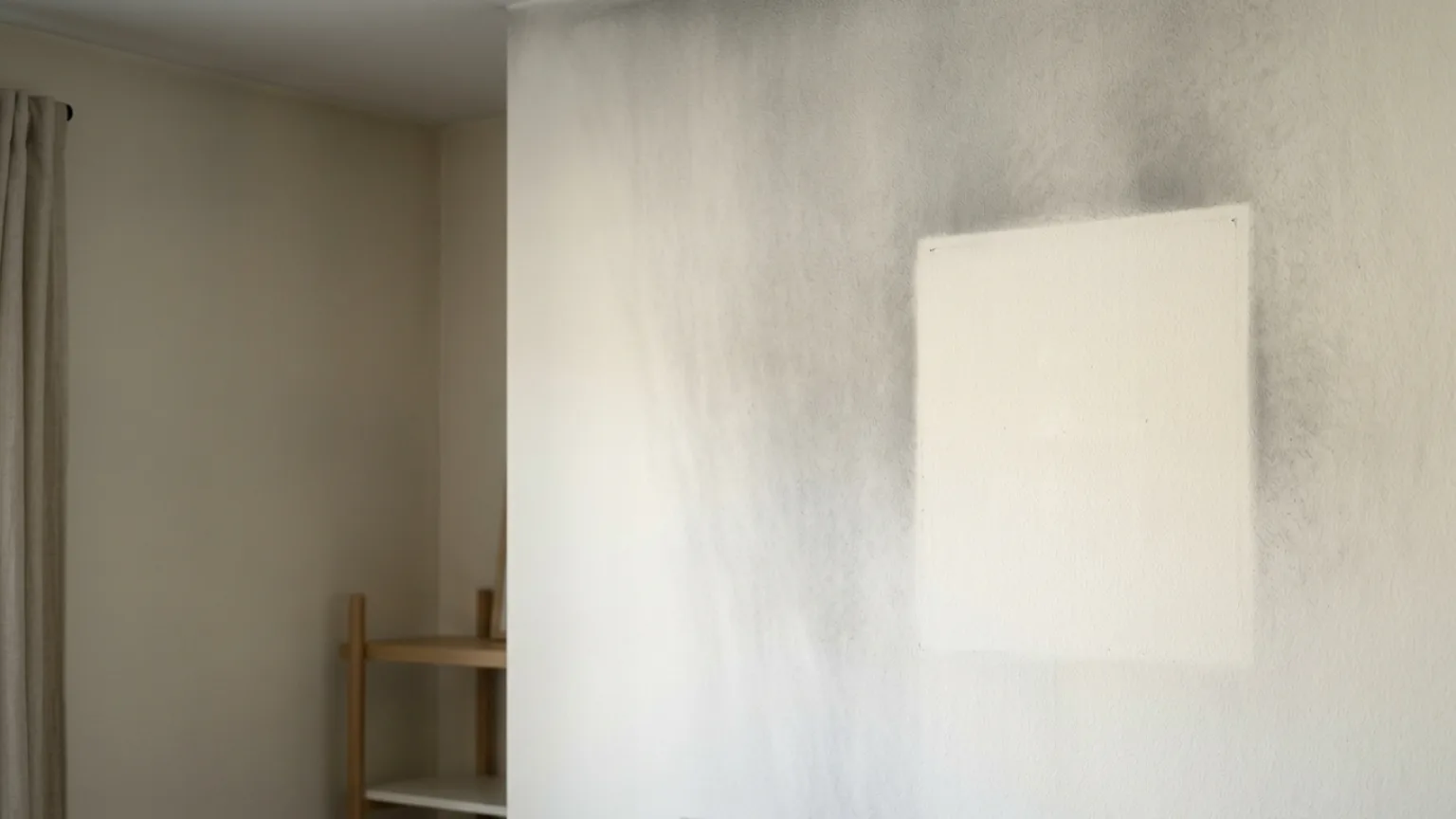
Smoke odor is not a smell sitting on your walls — it is residue that has bonded to porous material and migrated into wall cavities. Here is what actually removes it, and why the ozone machine you were about to rent is a bad idea.
You cleaned every surface, ran fans for a week, replaced the air filter, and put bowls of vinegar around the house. It smelled better for two days. Then a warm afternoon arrived and the smell came back exactly as strong.
That pattern is the whole problem in miniature. Smoke odor is not a smell floating in the air — it is microscopic residue that has bonded into porous materials and migrated into places you cannot reach. Heat and humidity re-release it. Until the residue is removed or chemically neutralized where it actually sits, no amount of cleaning the visible surfaces will hold.
Where the smell actually lives
Smoke behaves like a gas under pressure. It moves toward cooler surfaces and into any cavity with lower pressure — which in a house means everywhere:
- Inside wall cavities, pulled through outlet and switch boxes.
- In the HVAC ductwork and on the evaporator coil, which then redistributes it every time the system runs.
- In attic and wall insulation, which is porous, fibrous, and effectively a smoke sponge.
- In carpet backing and the pad beneath it, in upholstery foam, and in mattresses.
- Absorbed into unsealed wood — framing, cabinet interiors, subfloor, closet shelving.
- On the back sides of drawers and inside cabinetry that was never opened during cleaning.
Note how many of those are inaccessible without disassembly. This is why professional deodorization involves opening things up rather than simply treating rooms.
Not all smoke is the same
| Smoke Type | Typical Source | Behavior |
|---|---|---|
| Wet smoke | Low-heat smoldering fire, plastics and rubber | Sticky, smeary, strong pungent odor — smears badly if wiped wrong |
| Dry smoke | Fast, high-temperature fire, wood and paper | Powdery, easier to clean, but penetrates cracks and cavities deeply |
| Protein smoke | Kitchen fire involving food or grease | Nearly invisible residue, extremely persistent odor, discolors paint and varnish |
| Fuel oil soot | Furnace puff-back | Heavy oily residue over large areas |
| Wildfire smoke and ash | Structures and vegetation burning nearby | Fine particulate, alkaline ash, enters through HVAC and gaps — see our wildfire ash guide |
Protein smoke is the one that surprises people. A pot left on a burner can produce almost no visible residue and an odor that outlasts a far more dramatic fire. Kitchen fires are also the most common residential fire scenario, as covered in our post on the most common fire damage in a home.
What actually works, in order
- Remove the source material. Charred debris, burned contents, and any material that cannot be cleaned comes out first. Nothing else works while the source is still in the building.
- Remove contaminated porous materials. Saturated insulation, carpet pad, and heavily affected drywall are discarded rather than treated.
- HEPA-vacuum and clean every surface. Dry soot is removed with specialized sponges before any wet cleaning, because water smears residue into the finish.
- Clean the HVAC system. Ducts, coil, and blower — otherwise the system re-contaminates the house on the first cycle.
- Seal residual odor in framing and subfloor where materials cannot be removed, using a shellac-based or specialty sealer.
- Deodorize the air and the cavities with the appropriate technology for the situation.
- Rebuild and refinish.
Steps 4 and 5 are the two most commonly skipped by general cleaning crews, and they are the reason odor returns weeks later in a house that was supposedly finished. This sequence is the core of professional smoke clean-up.
About that ozone machine
Ozone generators are the most commonly rented and most commonly misused piece of equipment in odor removal. Ozone does break down odor molecules — it also breaks down lung tissue. The EPA's assessment of ozone generators sold as air cleaners states plainly that ozone can be harmful to health, that inhaling it can damage the lungs, and that relatively low amounts can cause chest pain, coughing, shortness of breath, and throat irritation.
Used professionally, ozone is run only in a fully evacuated structure — no people, no pets, no plants — for a controlled period, followed by a controlled airing-out before reoccupancy. Rubber, some plastics, and certain fabrics degrade with exposure. Running a rented unit in an occupied home overnight, which is what most homeowners do, is genuinely unsafe and it is why we treat ozone as a targeted tool rather than a default one.
Hydroxyl generators and thermal fogging
Hydroxyl generators produce hydroxyl radicals using UV light, and unlike ozone they can be operated in occupied spaces. They work more slowly, which is a fair trade for being able to run continuously while the family is home and while other restoration work proceeds.
Thermal fogging vaporizes a deodorizing compound into a dense fog that behaves like smoke — following the same path smoke took, into wall cavities, ductwork, and material pores, and pairing with the odor molecules there. It is highly effective at reaching what you cannot reach, and it is not a standalone solution. Fogging a house that still contains contaminated insulation buys weeks, not a resolution.
What does not work
- Air fresheners, plug-ins, and candles. These add a second odor rather than removing the first.
- Bowls of vinegar, coffee grounds, or baking soda. Marginal on light residual odor in a single room; irrelevant against structural contamination.
- Painting over affected drywall without a sealing primer. Standard latex does not block odor migration.
- Consumer air purifiers. Useful for airborne particulate, powerless against odor bonded into materials.
- Time. Smoke odor in insulation and framing does not meaningfully dissipate on its own — homes still smell years later.
Frequently asked questions
- How long does smoke smell last in a house?
- Indefinitely, if the residue is not removed. Odor bonded into insulation, framing, and ductwork can persist for years and will re-release whenever temperature or humidity rises. Properly remediated, the odor is gone when the work is finished — not fading gradually afterward.
- Can smoke smell come back after cleaning?
- Yes, and it is the most common complaint we hear from homeowners who used a general cleaning service. It typically returns on the first hot day or the first time the HVAC system runs heavily, because the residue in cavities and ductwork was never addressed.
- Is it safe to live in a house that smells like smoke?
- Light residual odor after a small, well-cleaned incident is generally a comfort issue rather than a health one. Persistent strong odor indicates residue is still present, and fire residue contains combustion byproducts worth removing rather than living with — especially where there are children, older adults, or anyone with asthma in the household.
- Will insurance cover smoke odor removal?
- Deodorization is normally part of a covered fire loss and is included in the mitigation scope. Where it gets contested is scope rather than coverage — whether ductwork, insulation, or contents cleaning are included. Detailed documentation of where residue was found is what settles those conversations.
If the smell keeps coming back, the residue is still there
Gallagher Restoration Co. handles soot removal, deodorization, and full fire rebuild across Riverside, San Bernardino, Orange, and San Diego counties from Canyon Lake — IICRC-trained, family-owned for more than 15 years, CSLB #1061640. If you are still in the immediate aftermath, start with our guide to the first 72 hours after a house fire. Otherwise call (951) 541-0034 for 24/7 dispatch or request an assessment.