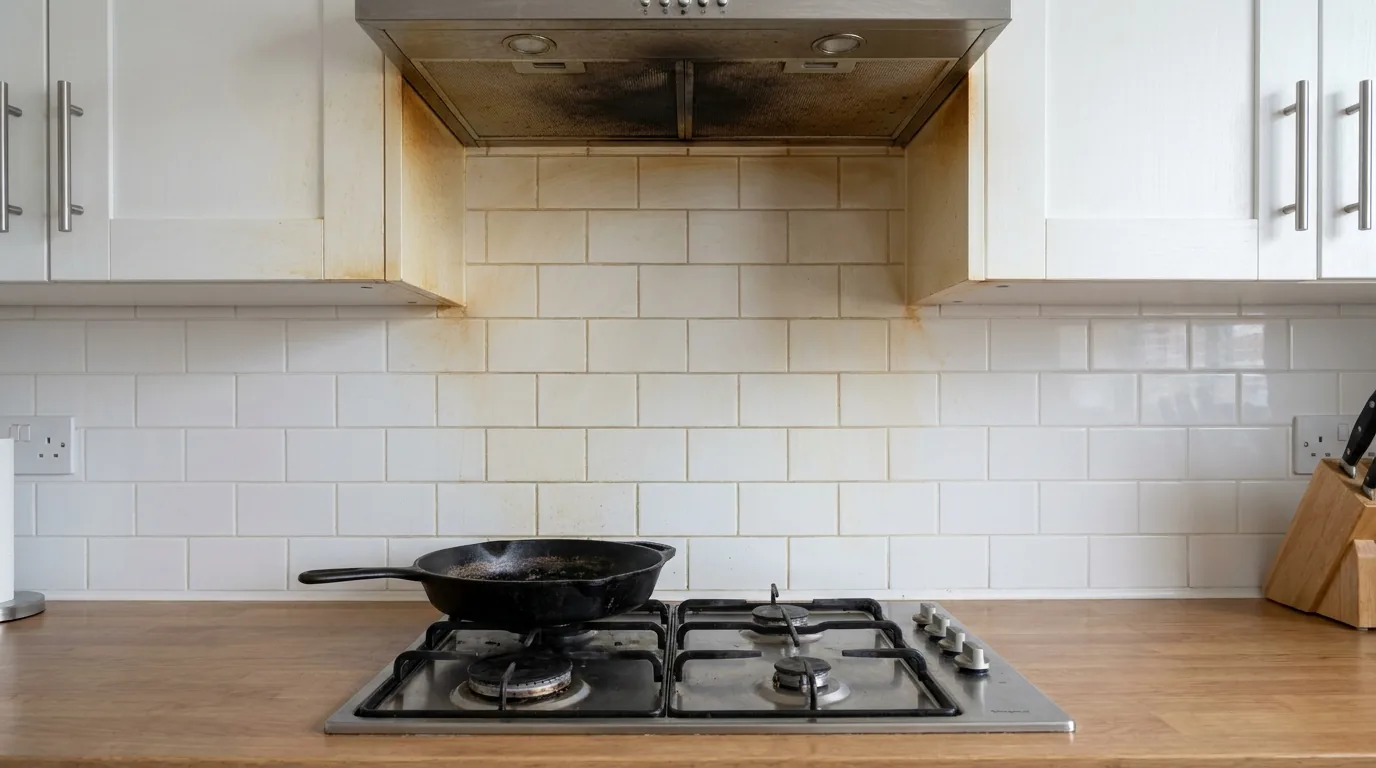
Cooking is the leading cause of home fires, and the holidays are its peak. Why water makes a grease fire worse, what to do instead, and why kitchen smoke is the hardest residue to clean.
Cooking is the leading cause of home structure fires and home fire injuries in the United States, and the single biggest day for them every year is Thanksgiving. Not because anyone becomes careless on one specific Thursday, but because of the conditions: more burners running at once, more oil at higher temperatures, a full house, and someone unfamiliar with the kitchen stepping away from a pan.
Most of these fires are small. That is the important part. The overwhelming majority of kitchen fires never reach the structure — and they still cost thousands, because of what they put into the air.
Never put water on a grease fire
This is the one instruction worth knowing cold, because the instinct runs exactly the wrong way.
Cooking oil burns well above the boiling point of water. When water hits it, the water flashes to steam instantly and expands violently — and because it went in underneath the oil, that expansion throws burning oil up and outward. A cup of water does not extinguish a pan fire. It converts a contained pan fire into a fireball that reaches the cabinets, the ceiling, and whoever is standing there.
The same applies to moving the pan. Carrying a burning pan to the sink or the back door spills flaming oil along the route and puts it between you and your exit.
What to do instead
- Turn off the heat. Do not move the pan.
- Smother it. Slide a metal lid or a baking sheet over the pan from the side, shielding your hand, and leave it in place. Fire needs oxygen and the lid removes it.
- Leave the lid on until the pan is completely cool. Lifting it early reintroduces oxygen to oil that is still above its ignition temperature, and it relights.
- Baking soda works on a small, contained flame. Flour does not — flour is combustible and will make it dramatically worse. Neither is a substitute for a lid.
- For an oven or broiler fire, keep the door shut and turn the oven off. The sealed cavity starves it.
- If it has left the pan, get everyone out and call 911. A fire that has reached the cabinets or the hood is past the point where a household response is appropriate.
- Keep an extinguisher rated for cooking fires within reach of the kitchen, and know how to use it before you need to.
One seasonal addition: if you fry a turkey, the bird must be completely thawed and dry, the fryer must not be overfilled, and it belongs outdoors on a flat surface well away from the house, the garage, and anything overhead. A partially frozen turkey lowered into hot oil causes a violent boil-over, and the oil reaching the burner is what produces the fires that make the news every November.
Why kitchen smoke is the difficult kind
Here is the part homeowners do not expect. A grease fire that was out in thirty seconds and never damaged a cabinet can still produce a restoration job, because of what burning protein and oil deposit on every surface in the house.
Smoke residue is not one substance. What a fire leaves behind depends on what burned and how hot it burned, and those residues behave very differently.
| Residue Type | Typical Source | What Makes It Difficult |
|---|---|---|
| Protein | Burned food, grease, oil | Nearly invisible, thin, amber, extremely strong odor, smears when wiped |
| Dry smoke | Fast, hot-burning fire | Powdery, spreads far, works into cracks and porous surfaces |
| Wet smoke | Slow, smoldering, low heat | Thick, sticky, pungent, webs across corners and ceilings |
| Fuel or oil soot | Furnace or appliance malfunction | Dense black, stains quickly, difficult on fabrics |
Kitchen fires produce protein residue, and it is the one most often mishandled, because you largely cannot see it. The walls look fine. The ceiling looks fine. What you have is a thin, greasy, strongly odorous film deposited on every cool surface the smoke reached — which, because it travels with air, means rooms nowhere near the kitchen.
Wiping it with a household cleaner smears it and drives it into the paint. Painting over it seals the odor under the finish, where it keeps releasing. Protein residue needs the right chemistry and the right sequence, which is what smoke clean-up means in practice, and we go through the odor side in how to get smoke smell out of a house.
The two reflexes that spread it
- Running the HVAC system to clear the air. This pulls residue into the return, through the ductwork, and distributes it into rooms that had no smoke in them at all. Turn the system off and ventilate with open windows and box fans pointed outward instead.
- Starting to clean immediately with whatever is under the sink. Dry-wiping protein residue smears it; the wrong degreaser can set it. Photograph everything first, ventilate, and leave the surfaces alone until someone has assessed what is actually on them.
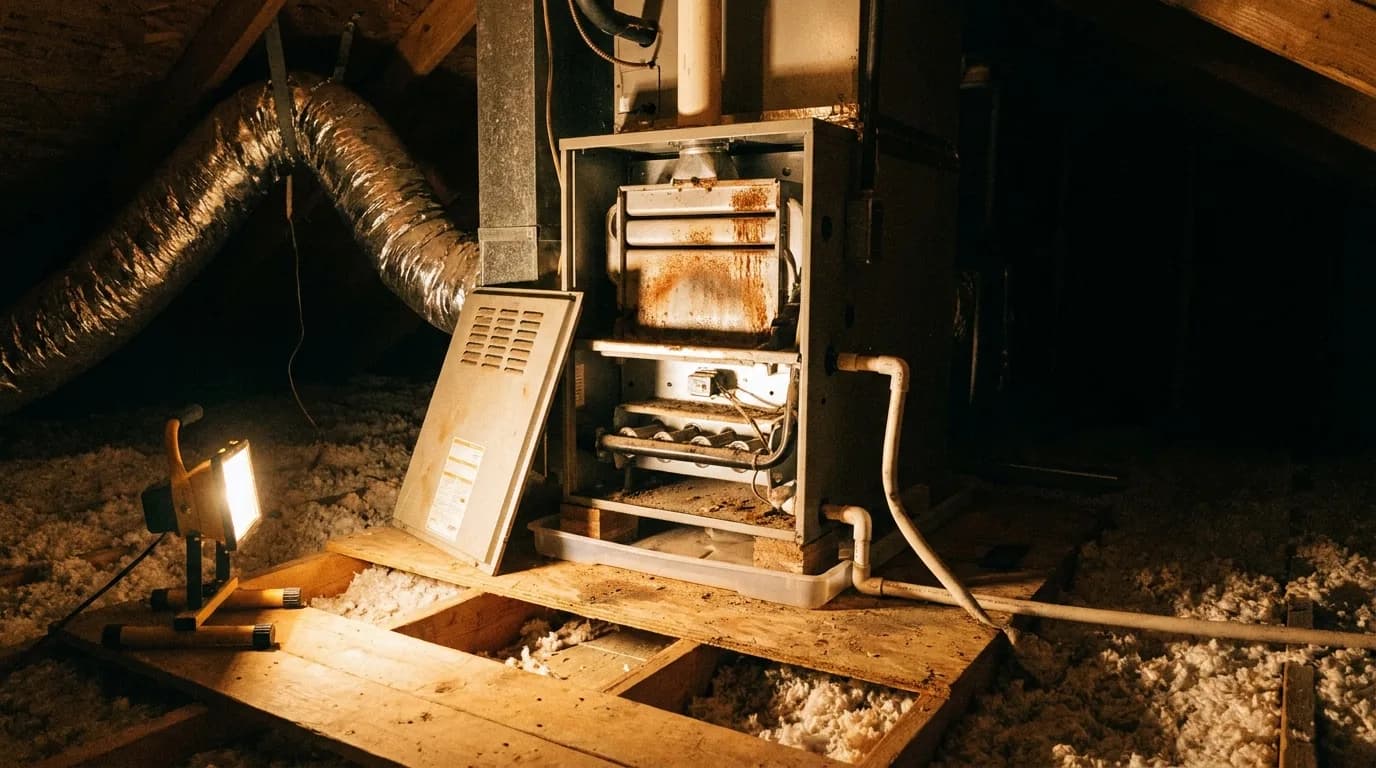
Also worth knowing: the range hood, the filters, and the duct above it collect grease over years. A fire at the cooktop frequently involves that accumulation, which is why the hood should be part of the assessment rather than something that gets wiped and forgotten.
What prevents most of them
- Stay in the kitchen when something is frying, grilling, or broiling. Unattended cooking is the dominant cause, and it is the most preventable one.
- Keep the cooktop and the hood clean. Accumulated grease is fuel sitting directly above the heat.
- Keep towels, packaging, oven mitts, and paper off and away from the burners.
- Turn pot handles inward, and keep children and pets out of the cooking zone when burners are hot.
- Use a timer whenever something is simmering or in the oven, especially with a full house and conversation going.
- Test the smoke alarms before the holidays, and do not disable the kitchen one because it nuisance-trips. Move it or replace it with a photoelectric unit instead.
Frequently asked questions
- Does homeowners insurance cover a kitchen fire?
- Fire is a covered peril on essentially every homeowners policy and on FAIR Plan dwelling fire policies, so both the fire damage and the resulting smoke damage are generally covered. The friction is usually about scope — how much cleaning the residue actually requires, whether contents are cleaned or replaced, and whether the HVAC system is included. Documentation of residue found, room by room, is what settles that.
- My kitchen fire was tiny. Do I really need anyone to look at it?
- If the smoke stayed in the kitchen and the smell is gone in a day or two with the windows open, probably not. If you can still smell it after several days, if the odor comes back on a warm afternoon, or if the HVAC ran at any point during or after the fire, it is worth an assessment — those are the signs residue is sitting on surfaces and in the ductwork rather than having aired out.
- Why does the smell keep coming back?
- Odor compounds absorbed into porous materials — drywall, paint, textiles, cabinetry — release slowly, and they release faster as temperature and humidity rise. That is why a house that smelled acceptable in the morning smells strongly by late afternoon. Masking it does nothing; the materials holding it have to be treated.
- Can I use a fire extinguisher on a grease fire?
- Use one rated for it. A standard dry chemical ABC extinguisher will work on a small cooking fire, though the discharge can splash oil if used too close or at the wrong angle — aim at the base from a distance and sweep. Commercial kitchens use Class K units made specifically for cooking oils. Never use water, and never use a water-type extinguisher.
After the fire is out
Gallagher Restoration Co. handles fire damage restoration and smoke remediation across Riverside, San Bernardino, Orange, and San Diego counties — family-owned for more than 15 years, IICRC-trained, CSLB #1061640, 24/7 dispatch with a 60-minute on-site target and direct carrier billing. Call (951) 541-0034 or request an assessment. For the broader picture, what to do after a house fire covers the first week.